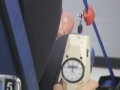
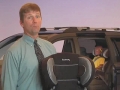
Boosters are better than they used to be at fitting lap and shoulder belts on 4 to 8-year-old kids to restrain them in a crash - so parents don\'t have to search as hard for a good fit for their child and vehicle. Most belt-positioning boosters, though, don\'t offer consistently good fit in all vehicles. This is the bottom line in the Insurance Institute for Highway Safety\'s third round of booster evaluations.
Researchers assessed the safety belt fit of 72 boosters, assigning the best ones the top ratings of BEST BET or GOOD BET because they correctly position belts on average booster-age kids in most vehicles. The worst performers are ones the Institute doesn\'t recommend because they do a poor job of fitting belts. A good booster routes the lap belt across a child\'s upper thighs and positions the shoulder belt at midshoulder.
Only 3 vehicles of more than 100 evaluated by the Insurance Institute for Highway Safety have child restraint installation hardware that earns a good rating for ease of use, while more than half have hardware that is poor or marginal.
The Institute's new LATCH ratings will serve as a resource for families looking for a vehicle that makes it easy to transport their children safely. They also are intended to encourage vehicle manufacturers to pay attention to this equipment and make improvements. Properly installed, age-appropriate child restraints provide considerably more protection for children in crashes than safety belts alone. However, observational studies have found that parents and caregivers often fail to secure them tightly or make other installation mistakes.
LATCH, which stands for Lower Anchors and Tethers for Children, is intended to make it easier to install a child seat properly. It works: Child restraints installed with LATCH, rather than with vehicle safety belts, are more likely to be installed correctly, research has shown. But in many vehicles, LATCH hardware could be better. Parents are more likely to install the seat correctly when the LATCH hardware meets certain key ease-of-use criteria.
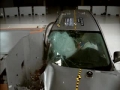
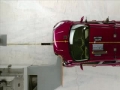
Drivers of vehicles with good small overlap front ratings from the Insurance Institute from Highway Safety can expect to be protected well in a frontal crash involving the left corner of the vehicle. But how would the passengers sitting next to them fare in a right-side small overlap crash? A new study shows that good protection doesn’t always extend across the front seat.
The Institute conducted 40 mph passenger-side small overlap tests on seven small SUVs with good driver-side small overlap ratings. Only one of the vehicles, the 2016 Hyundai Tucson, performed at a level corresponding to a good rating, and the others ran the gamut from poor to acceptable.
The results have prompted IIHS to consider instituting a passenger-side rating as part of its TOP SAFETY PICK criteria.
To view the multimedia release go to:
http://www.multivu.com/players/English/7856251-ad-council-embrace-refugees/
Thousands of poor youth in developing countries now have opportunities to escape poverty through education and vocational training with the HOPE--Helping Overcome Poverty through Education-- Fund provided by Children International, a U.S.-based humanitarian organization.
To view Multimedia News Release, go to http://multivu.prnewswire.com/mnr/childreninternational/46386/
The following video has been edited and taken from the show aired May 8, 2013. 520,000 people living with AIDS in Thailand . The number is growing and hundreds die in pain everyday . The majority of these patients can not afford treatment since they are poor. Some HIV people just got kicked out of their houses . Thousands of them were dumped out of their family's cars in front of this temple. It still happens everyday. The place called
Just over half of 2018 model vehicles evaluated by the Insurance Institute for Highway Safety are available with headlights that do an adequate job of lighting the road at night and limiting glare for oncoming drivers, but most good-rated headlights are optional or bundled with other features that can raise the price of the vehicle.
Since IIHS released its first headlight ratings for passenger vehicles in 2016, most manufacturers have focused on improving this key safety component. That year, only 2 of 95 headlight systems on 2016-model vehicles evaluated earned a good rating.
For the 2018 model year, the best-available headlights on 32 of 165 models evaluated earn the highest rating of good, and the best-available headlights on 58 models earn the second-highest rating of acceptable. Thirty-two models have only marginal-rated headlights, while poor-rated headlights are the only ones available for 43 models.
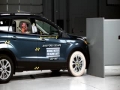
In a new round of evaluations, 5 of 7 small SUVs earn good ratings from the Insurance Institute for Highway Safety for occupant protection in a passenger-side small overlap front crash.
The ratings bring to 16 the number of small SUVs the Institute has evaluated in the passenger-side small overlap front test, which was introduced in 2017 to encourage manufacturers to offer the same level of protection for front-seat passengers as drivers in this type of crash.
The BMW X1; Chevrolet Equinox and its twin, the GMC Terrain; Jeep Compass and Mitsubishi Outlander earn good ratings in the passenger-side small overlap front test. The Mitsubishi Outlander Sport earns a marginal rating, and the Ford Escape earns poor. For the 2018 model year, the Equinox shed weight to join the small SUV size class. Earlier models were classified as midsize.
None of the newly rated 2018 models earns better than acceptable marks for structure. (The Honda CR-V and Mazda CX-5 are the only small SUVs evaluated so far to earn good ratings for structure in the passenger-side small overlap front test.) The Outlander Sport is marginal, and the Escape is rated poor. Both the Outlander Sport and Escape allowed too much intrusion into the occupant compartment on the right side.
Researchers have discovered that a subtype of leukemia characterized by a poor prognosis is fueled by mutations in pathways distinctly different from a seemingly similar leukemia associated with a much better outcome. The findings from the St. Jude Children’s Research Hospital — Washington University Pediatric Cancer Genome Project (PCGP) highlight a possible new strategy for treating patients with this more aggressive cancer.
The work provides the first details of the genetic alterations fueling a subtype of acute lymphoblastic leukemia (ALL) known as early T-cell precursor ALL (ETP-ALL). The results suggest ETP-ALL has more in common with acute myeloid leukemia (AML) than with other subtypes of ALL. The study appears in the January 12 edition of the journal Nature.
To view Multimedia News Release, go to http://www.multivu.com/mnr/46768-st-jude-cancer-genome-sequencing-project-combat-aggressive-leukemia
More @ http://www.failfunnies.com
See what happens to this poor schlep as he fills his gas tank. Get a laugh at how freaky this accident really is. If your still bored, check out my profile if you are into that sort of thing. If your still bored, check out/add my profile if you like 'fails' or are into that sort of thing.
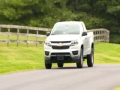
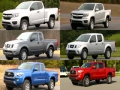
Four out of eight small pickup trucks evaluated by the Insurance Institute for Highway Safety earn good ratings for occupant protection in all five IIHS crashworthiness evaluations, but the lack of an automatic emergency braking system and poor-rated headlights means these pickups fall short of qualifying for either of the Institute’s safety awards.
IIHS engineers evaluated two body styles of each pickup — crew cab and extended cab. Crew cabs have four full doors and two full rows of seating. Extended cabs have two full front doors, two smaller rear doors and compact second-row seats. The Institute tests the two most popular versions of pickups because their performance can vary by body style. The ratings in this round of evaluations apply to 2017 models.
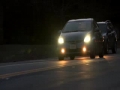
The Toyota Prius v is the only midsize car out of 31 evaluated to earn a good rating in the Insurance Institute for Highway Safety’s first-ever headlight ratings.
The best available headlights on 11 cars earn an acceptable rating, while nine only reach a marginal rating. Ten of the vehicles can’t be purchased with anything other than poor-rated headlights.
A vehicle’s price tag is no guarantee of decent headlights. Many of the poor-rated headlights belong to luxury vehicles.
The ability to see the road ahead, along with any pedestrians, bicyclists or obstacles, is an obvious essential for drivers. However, government standards for headlights, based on laboratory tests, allow huge variation in the amount of illumination that headlights provide in actual on-road driving. With about half of traffic deaths occurring either in the dark or in dawn or dusk conditions, improved headlights have the potential to bring about substantial reductions in fatalities.