Finding yourself stranded in your car due to treacherous conditions like snow, ice, poor visibility and slick roads only to discover you have junk in the trunk, rather than the necessary roadside emergency supplies, can place you and your family in jeopardy.
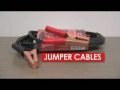
According to a new survey by State Farm® and KRC Research, more than 60 percent of drivers had some sort of “junk” (non-emergency supplies) in their trunk ranging from extra clothes and shoes to used food or drink containers. While 99 percent of drivers had at least one emergency supply in their vehicle, such as spare tire or jumper cables, a mere nine percent carried all the essential emergency roadside supplies.
To view Multimedia News Release, go to http://www.multivu.com/mnr/56805-state-farm-survey-few-drivers-keep-emergency-supplies-in-vehicle
World Water Day is March 22, and the children and youth of Children International are celebrating around the world. They know firsthand the difference clean, accessible water can make in their lives.
Some of them also know what it feels like to make clean water available to others. In 2012, the youth of Children International in Lusaka, Zambia, dedicated their Youth Empowerment Fund to extend the supply of clean, piped water to the poor community of Chibolya.
To view Multimedia News Release, go to http://www.multivu.com/mnr/57995-children-international-world-water-day
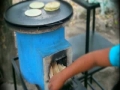
Children International, a leading humanitarian organization, is providing fuel-efficient Ecocina cookstoves that can save lives among poor families in rural Honduras. The stoves are also better for the environment because they reduce wood consumption and harmful pollutants – a great reason to celebrate on Earth Day. In stark contrast to modern kitchens where burners can be turned on and off at will, “kitchens” in rural areas of the developing world often consist of open flames inside highly flammable primitive homes.
To view Multimedia News Release, go to http://www.multivu.com/mnr/57996-children-international-provides-stoves-that-save-lives-in-latin-america
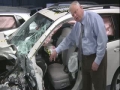
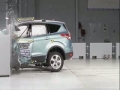
The 2014 Subaru Forester is the first vehicle to ace every aspect of the challenging small overlap front crash test conducted by the Insurance Institute for Highway Safety (IIHS). The Forester, the only 1 of 13 small SUVs to earn an overall rating of good in the test, and the 2013 Mitsubishi Outlander Sport, which earns acceptable, are the latest vehicles to qualify for the Institute’s recently inaugurated top honor, TOP SAFETY PICK+. Each of the other 11 SUVs earns either a poor or marginal rating.
The following video has been edited and taken from the show aired May 8, 2013. 520,000 people living with AIDS in Thailand . The number is growing and hundreds die in pain everyday . The majority of these patients can not afford treatment since they are poor. Some HIV people just got kicked out of their houses . Thousands of them were dumped out of their family's cars in front of this temple. It still happens everyday. The place called
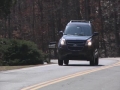
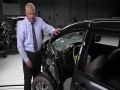
The Chevrolet Equinox and its twin, the GMC Terrain, are the only midsize SUVs out of nine evaluated to earn a good rating in the Insurance Institute for Highway Safety’s small overlap front crash test, which continues to challenge manufacturers more than a year and a half after its introduction.
The Equinox and the Terrain qualify for the Institute’s highest award for 2014, TOP SAFETY PICK+. The Toyota Highlander, a midsize SUV whose acceptable small overlap rating was announced in December, also qualifies. The award is given to vehicles with a good or acceptable small overlap rating, good ratings in four other occupant protection tests, and a rating of basic or higher for front crash prevention.
Three other midsize SUVs in the test group rate poor for small overlap protection, and three are marginal.
The Mini Cooper Countryman is the only small car to earn a good rating among the latest group of 12 small cars subjected to the Insurance Institute for Highway Safety’s small overlap front crash test.
Two electric models and a hybrid are in the mix, with varied results. The electric-powered Chevrolet Volt (with a gasoline engine “range extender”) earns an acceptable rating, while its battery-electric rival, the Nissan Leaf, earns a poor rating. The Ford C-Max Hybrid, a small four-door wagon, earns an acceptable rating. Another small four-door wagon, the gasoline-powered Mazda 5, is rated poor.
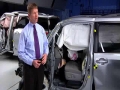
A group of four minivans recently tested by the Insurance Institute for Highway Safety for protection in small overlap front crashes shows some of the worst possible outcomes for this type of crash, with only one vehicle performing acceptably.
The Nissan Quest, the Chrysler Town & Country and its twin, the Dodge Grand Caravan, all earn poor ratings. The exception to the disappointing pattern is the 2015 Toyota Sienna, which earns an acceptable rating. It joins the Honda Odyssey, which last year earned a good rating in the test, in the ranks of TOP SAFETY PICK+ winners.
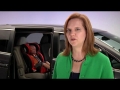
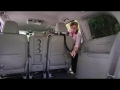
Only 3 vehicles of more than 100 evaluated by the Insurance Institute for Highway Safety have child restraint installation hardware that earns a good rating for ease of use, while more than half have hardware that is poor or marginal.
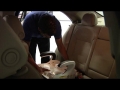
The Institute's new LATCH ratings will serve as a resource for families looking for a vehicle that makes it easy to transport their children safely. They also are intended to encourage vehicle manufacturers to pay attention to this equipment and make improvements. Properly installed, age-appropriate child restraints provide considerably more protection for children in crashes than safety belts alone. However, observational studies have found that parents and caregivers often fail to secure them tightly or make other installation mistakes.
LATCH, which stands for Lower Anchors and Tethers for Children, is intended to make it easier to install a child seat properly. It works: Child restraints installed with LATCH, rather than with vehicle safety belts, are more likely to be installed correctly, research has shown. But in many vehicles, LATCH hardware could be better. Parents are more likely to install the seat correctly when the LATCH hardware meets certain key ease-of-use criteria.
Flying takes a heavy toll on Americans’ performance: according to results released today from a 1Above survey conducted online in May by Harris Poll among over 2,000 U.S. adults, 81% of U.S. fliers (Americans who’ve ever flown) whose most recent flight was an hour or longer say they need one full day or more to recover after a flight. Yet results show poor hydration and flying habits abound - factors that greatly exacerbate jet lag symptoms and health risks long after each flight. 1Above, the New Zealand brand behind the flight drink designed to help people combat jet leg and arrive ready, is releasing these findings as they launch in North America this week.
To view the Multimedia News Release, go http://www.multivu.com/players/English/7540851-1above-flight-drink-survey/