America’s traffic congestion recession is over. Just as the U.S. economy has regained nearly all of the 9 million jobs lost during the downturn, a new report produced by INRIX and the Texas A&M Transportation Institute (TTI) shows that traffic congestion has returned to pre-recession levels.
According to the 2015 Urban Mobility Scorecard, travel delays due to traffic congestion caused drivers to waste more than 3 billion gallons of fuel and kept travelers stuck in their cars for nearly 7 billion extra hours – 42 hours per rush-hour commuter. The total nationwide price tag: $160 billion, or $960 per commuter.
Washington, D.C. tops the list of gridlock-plagued cities, with 82 hours of delay per commuter, followed by Los Angeles (80 hours), San Francisco (78 hours), New York (74 hours), and San Jose (67 hours).
To view the multimedia release go to:
http://www.multivu.com/players/English/7430751-inrix-2015-urban-mobility-scorecard/
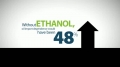
On American roads ethanol is saving consumers money at the pump and improving overall engine performance. In 2011, the use of ethanol helped reduce the average price of gas by $1.09 saving American families $1,200 over the year. Additionally, as a high octane additive, ethanol helps car engines run cleaner and reduces engine knock and pinging.
LEARN MORE: http://www.mnbiofuels.org/
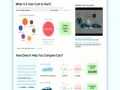
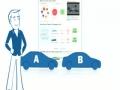
The 2014 model-year vehicles and brands (in both non-luxury and luxury categories) with the lowest projected ownership costs were announced today by Kelley Blue Book www.kbb.com, the leading provider of new and used car information. These awards are based on Kelley Blue Book’s 5-Year Cost to Own data for new cars for the initial five-year ownership period.
While depreciation (or loss of value) and fuel costs may be the greatest expense incurred in owning a vehicle, there are other factors that can have a significant impact on a consumer’s pocketbook. Available on Kelley Blue Book’s KBB.com, 5-Year Cost to Own information takes into consideration depreciation, expected fuel costs, finance and insurance fees, maintenance and repair costs, and state fees for new models.
To view the Multimedia News Release, go to http://www.multivu.com/mnr/65344-kelley-blue-book-kbb-announces-2014-5-cost-to-own-award-winners
XQ Institute is launching XQ: The Super School Project, a challenge to reimagine and design the next American high school. Harnessing the best of American ingenuity in cities and towns across the country, XQ aims to help spark a movement to rethink the American high school—an institution that was designed to meet the needs of the Industrial Revolution and hasn’t changed in more than a century.
“Our nation is radically different than it was 100 years ago. Nearly every aspect of our daily lives—from how we communicate to how we work and play—has changed dramatically,” said Laurene Powell Jobs, Chair of the board of XQ Institute. “But our high schools have stayed frozen in time. Together, we have an opportunity to help fuel a movement for students, to inspire great high schools, and even to rethink school itself. Our passion at XQ is to help educators everywhere foster students who are curious, engaged, and creative—armed with the new literacies, knowledge, and skills needed to thrive,” she added. “To do that, we must use our collective imagination.”
From the Model T to the Tesla and the switchboard to the smart phone—everything has changed except for how we prepare our kids for the future. XQ: The Super School Project is a rallying call to America to change the outdated model that has failed to prepare our students for the demands of the global economy, and an open call to every community to rethink high school for today and tomorrow. XQ Institute will provide a fund of $50 million to support at least five selected schools over the next five years. It will also partner with them to provide expert support and guidance to turn their ideas into real Super Schools that can inspire the country.
To view the multimedia release go to:
http://www.multivu.com/players/English/7611851-xq-institute-super-school-project/
Months of speculation ended today after Volvo Cars unveiled its all-new Volvo XC90, delivering on its promise to introduce a visually striking, premium quality seven seat SUV with world leading safety features, new powertrain technologies, an unrivalled combination of power and fuel efficiency and a superlative interior finish.
To view the Multimedia News Release, go to http://www.multivu.com/players/English/7276259-volvo-XC90-world-premiere/
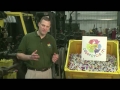
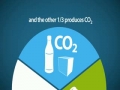
Crayola today launched its nationwide “COLORCYCLE” marker program, which transforms used markers directly into clean energy. The program is the latest innovation in the company’s continuing commitment to advance its sustainability efforts. The “COLORCYCLE” marker program will allow students to responsibly dispose of any type of used marker through an in-school collection process, keeping plastic out of landfills. Once the used markers are collected, a unique technology will convert the markers into usable fuel.
To view Multimedia News Release, go to http://www.multivu.com/mnr/57862-colorcycle-marker-crayola-clean-energy-program-clean-energy
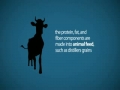
Ethanol provides more than just fuel for our cars. It also gives back nutritious feed for our nation's livestock in the form of distillers grains.
LEARN MORE: http://www.ethanolrfa.org/
As the primary source of biofuels in North America, many organizations are conducting research in the area of ethanol production. The National Corn-to-Ethanol Research Center (NCERC) is a research division of Southern Illinois University Edwardsville dedicated solely to ethanol-based biofuel research projects. On the federal level, the USDA conducts a large amount of research regarding ethanol production in the United States. Much of this research is targeted toward the effect of ethanol production on domestic food markets. A division of the U.S. Department of Energy, the National Renewable Energy Laboratory (NREL), has also conducted various ethanol research projects, mainly in the area of cellulosic ethanol.