Industry leaders attending the first Smart China Expo (SCE 2018) in China’s western city of Chongqing have articulated a new vision for how the world’s digital economy will evolve at the event’s Global Digital Economy Summit, a forum that brought together 650 participants under the theme “New Digital Economy, New Growth Engine.” Speakers projected a future in which Big Data reshapes the way businesses and governments operate, cooperate, and compete.
New forces being unleashed by current innovations threaten to disrupt the existing economic growth models of many industries, as digital information will rise to the same status as land and capital as a key element of productivity. Meanwhile, governments around the world are building “smart infrastructure” as they seek to use technology to upgrade power grids, railways, ports and toll roads, and seek to integrate everything. Big Data technology also helps build “smart cities,” boost consumption, and improve social welfare programs ranging from education to philanthropy to healthcare.
To view the multimedia release go to:
https://www.multivu.com/players/English/8389751-smart-china-expo-sce-2018/
A new water system now serves El Salado in Colombia after being chosen by Ferrovial for its Social Infrastructure programme in 2016. €162,000 euros has been invested in the aqueduct system, which is powered by a solar facility and is the first of its kind in Colombia. The community now has daily access to water fit for human consumption. Until now, it had a poor quality water supply that was only available for a few hours, three days a week, due to high maintenance costs.
The community of El Salado in Colombia was scarred by the massacre that took place 18 years ago, where 66 people were killed. All the residents abandoned the village and uprooted to Bogotá, Cartagena or Sincelejo, but a small group of former El Salado villagers eventually began the task of restoring the village for the return of its inhabitants.
To view the multimedia release go to:
https://www.multivu.com/players/uk/8274351-ferrovial-water-el-salado-colombia/
Spain is the country with more bars per inhabitant in the world, making going out a founding element of Spanish culture. Historically, social relations have been built around bars. Whether between its walls or on its terraces lies the unmistakable gastronomy of tapas. To say Spanish tradition is to say tapas. And to say tapas is to say olives.
Olives have always been known as the Queen of the Tapas. There are plenty of reasons for this reign. Being a preserved food, they are always at their best moment of consumption. With a simple drain and serve, the waiter has the ideal appetizer ready. Having in its flavor notes of the four basic flavors; sweet, salty, bitter and sour, they go well with any type of beverage, well beyond its classic introduction in a dry martini.
To view the multimedia release go to:
https://www.multivu.com/players/uk/8209951-olives-from-spain-invites-discover-tapas/
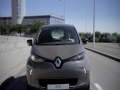
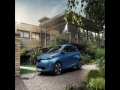
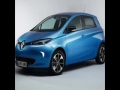
Andrew Frankel reviews the Renault Zoe – one of a new breed of all electric cars that can truly claim to be a practical alternative to traditional fuel cars.
2017 Renault Zoe
Renault has introduced a new Z.E. 40 battery for ZOE. At the same, ZOE owners can benefit from a range of new connected services and equipment upgrades. Order books for the new ZOE line-up are open. The new ZOEs fitted with the new Z.E. 40 battery are made at Renault's Flins plant in France and will be available for delivery before the end of 2016.
Double the range for even longer journeys
As the pioneer of all-electric mobility and Europe's number one seller of electric vehicles, Renault has stepped up its innovation programme and the deployment of its Zero Emissions strategy.
Fitted with the new Z.E. 40 battery, the Renault ZOE now delivers a record NEDC driving range of 400km, which is twice the distance delivered by the model at the time of its original launch.
The new Z.E. 40 battery has a real-world range of 300 kilometres in urban or suburban areas, for example.
The range permitted today by the ZOE is the longest of any mainstream all-electric vehicle and motorists can take advantage of this step forward now.
The ZOE is the best-selling electric vehicle in Europe and provides a real alternative to internal combustion-engine cars, since average daily commuting distances are well within the ZOE's capabilities.
The new battery removes the final psychological barrier that stands in the way of buying an electric car since ZOE users can now travel further and enjoy a wider variety of driving situations without worry about charging. This makes weekend trips a real possibility.
The Z.E. 40 battery's charging rate is similar to that of the standard battery, so 'topping up' doesn't take long at all. For example, just 30 minutes are required on average to charge the battery for an extra 80 kilometres of driving range when plugged into one of the many public charging points in operation in Europe. The ZOE continues to be equipped with the Quick Charge function to take full advantage of the maximum capacity of fast charging points located predominantly along motorway corridors.
An innovation that doubles battery capacity with no increase in size
The ZOE's new Z.E. 40 battery boasts 41kWh of useful energy, equivalent to almost double the storage capacity of the ZOE's standard battery (22kWh of useful energy).
Developed in close partnership with LG Chem, the battery uses high-energy density lithium-ion technology.
Renault and LG engineers have succeeded in increasing storage capacity without making the battery any bigger or a lot heavier. It was optimised by working on the chemistry of the cells in order to increase their energy density, rather than stacking additional battery modules, a commonly used technique.
This major new technology has been developed while ensuring the battery's reliability or safety.
The battery's large storage capacity ensures longer range for the ZOE thanks to the meticulous work that went into integrating the battery in the vehicle. The electronic management system of the battery optimises the ZOE's energy use on the move, while the new air circulation system maintains the temperature of the ZOE's battery at a constant level, making the car economical to run in very hot or very cold weather.
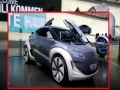
Renault ZOE is the first car to be designed as an all-electric model. A city car ideal for everyday use, it boasts the latest technology. Renault ZOE ships with six world firsts, designed to make it an easy-to-drive connected car with significant range. Revealed at the Geneva Motor Show in 2012, Renault ZOE will be available in three versions (Life, Zen and Intens) at end-2012.
Driving Renault ZOE is a new and enjoyable automotive experience. The wound rotor synchronous electric motor develops 65 kW with maximum torque of 220 Nm delivered instantly. ZOE combines strong acceleration and pick-up from the lowest engine speeds with a range of 210 km over an NEDC cycle.
// Renault ZOE est la première voiture conçue pour être 100 % électrique et idéale pour les usages quotidiens. Cette citadine intègre la technologie la plus avancée à travers six premières mondiales au service de la simplicité d'utilisation, de l'autonomie et de la connectivité. Révélée au salon de Genève 2012, Renault ZOE sera commercialisée dans trois versions différentes (Life, Zen et Intens) fin 2012.
Conduire Renault ZOE est une nouvelle expérience automobile, source de plaisirs. Le moteur électrique synchrone à rotor bobiné d'une puissance de 65 kW délivre instantanément un couple maximum de 220 Nm. Les accélérations et les reprises sont franches dès les bas régimes. Elle affiche par ailleurs, une autonomie de 210 km en cycle NEDC.
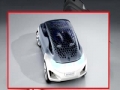
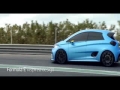
Enter the world of fun and performance with #ZOEeSportConcept. A careful blend of boldness and modernity.
//
Entrez dans le monde de la performance et du fun avec #ZOEeSportConcept. Un savant mélange d'audace et de modernité.