Soy consumption is up 14 percent since 2011,26 yet confusion lingers over soy’s role in everything from human health to food production. To clear up misperceptions, the United Soybean Board (USB) busts five common soy myths with science-backed facts on SoyConnection.com/soy-wisdom.
1) Eating soy does not increase breast cancer risk.
Clinical studies show soy isoflavone exposure does not adversely affect breast tissue as assessed by markers of breast cancer risk, such as breast cell proliferation.1–7 The American Institute for Cancer Research and the American Cancer Society say that women who have been diagnosed with breast cancer can safely consume soyfoods. In fact, the World Cancer Research Fund International has identified a link between soy consumption and an improved survival of breast cancer patients.8-9
“Not only does evidence indicate soyfoods may benefit women with breast cancer, but consuming soy when young helps prevent the onset of this disease later in life27-30,” stated Mark Messina, Ph.D., who has dedicated the past 30 years to understanding the health effects of soyfoods.
To view the multimedia release go to:
http://www.multivu.com/players/English/7877951-united-soybean-board-top-soy-myths/
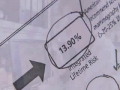
Phenogen Sciences, Inc. today announced the availability of BREVAGenplus, an easy-to-use predictive risk test for the millions of women at risk of developing sporadic, or non-hereditary, breast cancer. The test is an enhancement of the company’s first generation product, BREVAGen®. BREVAGenplus assesses both clinical risk factors and genetic markers known to be associated with sporadic, or non-hereditary, breast cancer to determine a woman’s five-year and lifetime risk of developing the disease. The test is designed to facilitate better informed decisions about breast cancer screening and preventive treatment plans for Caucasian, Hispanic and African-American women, age 35 years or above, who have not had breast cancer, lobular carcinoma in situ (LCIS) or ductal carcinoma in situ (DCIS), and have one or more risk factors for developing breast cancer.
To view the Multimedia News Release, go to http://www.multivu.com/players/English/7337351-phenogen-sciences-introduces-brevagenplus-breast-cancer-risk-assessment-test/
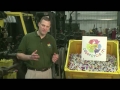
Crayola today launched its nationwide “COLORCYCLE” marker program, which transforms used markers directly into clean energy. The program is the latest innovation in the company’s continuing commitment to advance its sustainability efforts. The “COLORCYCLE” marker program will allow students to responsibly dispose of any type of used marker through an in-school collection process, keeping plastic out of landfills. Once the used markers are collected, a unique technology will convert the markers into usable fuel.
To view Multimedia News Release, go to http://www.multivu.com/mnr/57862-colorcycle-marker-crayola-clean-energy-program-clean-energy
Phenogen Sciences, Inc. [www.phenogensciences.com] today announced the immediate availability of BREVAGen™, a predictive risk test for the millions of women at above average risk of developing estrogen-receptor positive breast cancer. This first-in-class, scientifically-validated risk assessment test examines a woman’s clinical risk factors, such as her lifetime exposure to estrogen, combined with scientifically validated genetic markers to determine each patient’s personalized five-year and lifetime risk of developing breast cancer.
To view Multimedia News Release, go to http://www.multivu.com/mnr/58399-phenogen-sciences-brevagen-breast-cancer-risk-assessment-test-availability
You don�t know what you�ve got �til it�s gone. That�s the thinking behind a new integrated marketing campaign from Sharpie�, which poses the question �What would the world be like without self-expression?� The campaign aims to empower people to boldly showcase their individuality with Sharpie, expressing their creativity on everything from skateboards and stadium posters to motorcycle helmets and billboards.
To view Multimedia News Release, go to http://multivu.prnewswire.com/mnr/sharpie/44094/