Parking crashes usually don’t result in serious injuries, but repair costs can quickly mount, along with the hassle of going without the family vehicle while waiting for the body shop to finish work. The Insurance Institute for Highway Safety has launched a rear crash prevention ratings program to help consumers identify models with the technology that can prevent or mitigate low-speed backing crashes. Two systems earn the highest rating of superior, and four earn the second-highest rating of advanced.
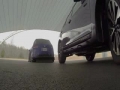
Rear crash prevention encompasses several technologies. Parking sensors issue warning beeps and/or seat vibrations when the equipped vehicle gets too close to another vehicle or object directly behind it, or, in some cases, in front of it. Rear cross-traffic alert warns drivers of approaching vehicles that might cross their path as they back up. Rear automatic emergency braking systems detect objects behind a reversing vehicle and may automatically brake if the driver doesn’t heed alerts to stop.
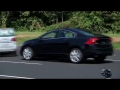
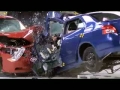
IIHS engineers evaluated rear autobrake systems on six popular 2017 model vehicles — the BMW 5 series sedan, Cadillac XT5 SUV, Infiniti QX60 SUV, Jeep Cherokee SUV, Subaru Outback wagon and Toyota Prius hatchback.
Under the three-tier rating scheme, models with optional or standard rear crash prevention systems are rated superior, advanced or basic. Ratings are determined by whether the vehicles have available rear autobrake and, if so, how it performs in a series of car-to-car and car-to-pole tests with different approach angles. The availability of parking sensors and rear cross-traffic alert also is factored in.
The Outback and XT5 earn a superior rating when equipped with optional rear autobrake, parking sensors and rear cross-traffic alert. The Cherokee, 5 series, QX60 and Prius earn an advanced rating with this optional gear.
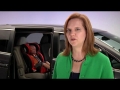
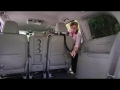
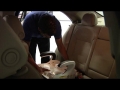
Only 3 vehicles of more than 100 evaluated by the Insurance Institute for Highway Safety have child restraint installation hardware that earns a good rating for ease of use, while more than half have hardware that is poor or marginal.
The Institute's new LATCH ratings will serve as a resource for families looking for a vehicle that makes it easy to transport their children safely. They also are intended to encourage vehicle manufacturers to pay attention to this equipment and make improvements. Properly installed, age-appropriate child restraints provide considerably more protection for children in crashes than safety belts alone. However, observational studies have found that parents and caregivers often fail to secure them tightly or make other installation mistakes.
LATCH, which stands for Lower Anchors and Tethers for Children, is intended to make it easier to install a child seat properly. It works: Child restraints installed with LATCH, rather than with vehicle safety belts, are more likely to be installed correctly, research has shown. But in many vehicles, LATCH hardware could be better. Parents are more likely to install the seat correctly when the LATCH hardware meets certain key ease-of-use criteria.
A new test program by the Insurance Institute for Highway Safety (IIHS) rates the performance of front crash prevention systems to help consumers decide which features to consider and encourage automakers to speed adoption of the technology. The rating system is based on research by the Highway Loss Data Institute (HLDI) indicating that forward collision warning and automatic braking systems are helping drivers avoid front-to-rear crashes.
The list of winners of the Institute's TOP SAFETY PICK award is longer than ever this year, with vehicles in nearly every size category the Institute evaluates earning accolades. From minicars to sedans to pickups, consumers have a record number of choices among 2012 models.
In all, 69 cars, 38 SUVs, 5 minivans, and 3 pickups earn TOP SAFETY PICK. The award recognizes vehicles that do the best job of protecting people in front, side, rollover, and rear crashes based on ratings in Institute evaluations. The ratings, which cover all 4 of the most common kinds of crashes, help shoppers pick vehicles that offer the highest levels of crash protection. Because the federal government now requires all 2012 and later passenger vehicles to have electronic stability control to help drivers avoid loss-of-control crashes, ESC no longer is a requirement to win as it was in prior years.
The winners’ circle includes 18 new recipients for 2012, while 97 models that previously qualified for the 2011 award carry over to 2012.
Hybrids have a safety edge over their conventional twins when it comes to shielding their occupants from injuries in crashes, new research by the Highway Loss Data Institute (HLDI), an affiliate of the Insurance Institute for Highway Safety, shows. On average, the odds of being injured in a crash are 25 percent lower for people in hybrids than people traveling in nonhybrid models.
The new finding is more good news for green-minded drivers who don’t want to trade safety for fuel economy. Not so long ago, car buyers had to choose between the two because fuel-efficient cars tended to be smaller and lighter. Now, consumers have more options than ever when it comes to picking an environmentally friendly — and crashworthy — vehicle.
For more information, go to: www.iihs.org
Tostitos tortilla chips and dips bring people together and are an essential part of most big football watch parties. These gatherings usually feature a spread of food and beverages and, many times, alcohol, leading to an increase in alcohol-related traffic crashes.
Recognizing this, Tostitos created the “Party Safe” bag – a bag of Tostitos chips featuring an alcohol sensor that acts as a reminder for people to not drink and drive after the party so everyone gets home safely. For those not lucky enough to get their hands on one of the limited-edition bags, Tostitos also partnered with Mothers Against Drunk Driving (MADD) to offer party-goers $10 off an Uber ride on Sunday, February 5 by using the barcode on the back of nearly every bag of Tostitos chips. This offer applies to both new and existing customers of Uber, but will be limited to the first 25,000 users who enter the code.
To view the multimedia release go to:
http://www.multivu.com/players/English/8020151-tostitos-super-bowl-madd-party-safe-bag/
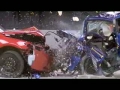
Today's SUVs and pickups pose far less risk to people in cars and minivans than previous generations, a new study from the Insurance Institute for Highway Safety shows. Until recently, SUVs and pickups were more likely than cars or minivans of the same weight to be involved in crashes that killed occupants of other cars or minivans. That's no longer the case for SUVs, and for pickups the higher risk is much less pronounced than it had been.