ADP®, a leading provider of employee healthcare benefits administration services and human capital management (HCM) services, today announced the findings of an ADP Research InstituteSM study based on actual, real-world data for approximately one million employees and more than two million covered lives. The ADP 2012 Study of Large Employer Health Benefits found that part-time workers eligible for health care benefits at large companies in the United States elect coverage at a significantly lower rate than full-time employees.
To view Multimedia News Release, go to http://www.multivu.com/mnr/60219-adp-research-institute-2012-study-of-large-employer-health-benefits
Nearly three in four American voters (74 percent) favor increasing federal funding for cancer research, according to the results of a new national survey conducted on behalf of the American Association for Cancer Research (AACR). The survey results were released today in conjunction with the AACR’s fifth annual Cancer Progress Report. The report highlights how federally funded research can power progress against cancer and urges Congress and the administration to implement a strategy for providing annual budget increases of at least 7 percent for the National Institutes of Health (NIH), National Cancer Institute (NCI), and U.S. Food and Drug Administration (FDA) in fiscal year 2016 and thereafter.
The national survey, which was conducted by Hart Research Associates and Public Opinion Strategies, shows that five out of every six voters recognize what the AACR Cancer Progress Report 2015 details: that progress is being made against cancer.
To view the multimedia release go to:
http://www.multivu.com/players/English/7613551-aacr-cancer-research-survey/
Federally funded research continues to spur progress against cancer; however, accelerating the pace of progress will require robust, sustained, and predictable annual funding increases for the National Institutes of Health (NIH), the National Cancer Institute (NCI), and the Food and Drug Administration (FDA). Additionally, strong financial support for the National Cancer Moonshot Initiative is required, according to the sixth annual American Association for Cancer Research (AACR) Cancer Progress Report, released today.
One of the most exciting new approaches to cancer treatment is cancer immunotherapy. As detailed in the report, the utility of immunotherapy is expanding rapidly. For example, on Aug. 1, 2015, one class of immunotherapeutics, checkpoint inhibitors, was initially approved for just two types of cancer—melanoma and lung cancer. As of Sept. 1, 2016, checkpoint inhibitors have been approved for treating six types of cancer—bladder cancer, head and neck cancer, Hodgkin lymphoma, kidney cancer, lung cancer, and melanoma.
To view the multimedia release go to:
http://www.multivu.com/players/English/7911951-aacr-2016-cancer-progress-report/
The number of vehicles earning either of two awards from the Insurance Institute for Highway Safety has jumped to 71 from 39 this time last year, giving consumers more choices for optimum protection in crashes. The number of winners in the top tier — TOP SAFETY PICK+ — has increased by 11 for 2015, despite a tougher standard for front crash prevention.
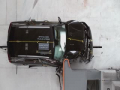
While the bar has been raised for TOP SAFETY PICK+, the criteria for TOP SAFETY PICK are unchanged from 2014: a good or acceptable rating in the challenging small overlap front test and a good rating in each of the Institute's four other crashworthiness evaluations — moderate overlap front, side, roof strength and head restraints. The 2015 TOP SAFETY PICK+ designation is awarded to vehicles that meet those criteria and also have an available front crash prevention system that earns an advanced or superior rating.
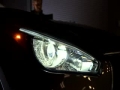
Just 15 vehicles qualify for the TOP SAFETY PICK+ award from IIHS after the requirements were strengthened to include good-rated headlights and good or acceptable passenger-side protection in small overlap front crashes.
Another 47 vehicles earn the TOP SAFETY PICK award, which now requires acceptable or good headlights. In contrast, headlights weren’t factored in for 2017 TOP SAFETY PICK, and an acceptable headlight rating was enough to bump a 2017 award winner into "plus" territory.
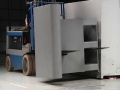
The inclusion of a passenger-side crash test is a first for any IIHS award. The Institute developed the passenger-side small overlap front crash test after it became clear that some manufacturers weren't paying sufficient attention to the passenger side as they made improvements to achieve better performance in the driver-side small overlap front test.
Nearly five dozen 2019 models meet stricter criteria to qualify for a 2019 TOP SAFETY PICK+ or TOP SAFETY PICK award from the Insurance Institute for Highway Safety. The 30 first-tier “plus” award winners earn the highest rating for passenger-side protection in a small overlap front crash and have good-rated available headlights, while the 27 winners of the second-tier award qualify with an acceptable or higher rating in the newest IIHS crash test and the nighttime headlight evaluation.
All 57 vehicles in this elite group earn good ratings in the Institute’s five other crashworthiness evaluations and have an available automatic emergency braking system that rates advanced or superior for front crash prevention.
IIHS now requires a good rating in the passenger-side small overlap front test to earn a 2019 TOP SAFETY PICK+ versus an acceptable or good rating for the 2018 award. An acceptable or good rating in the passenger-side test is a new criterion to earn a 2019 TOP SAFETY PICK.
This marks the sixth time that IIHS has raised the bar to earn the TOP SAFETY PICK+ award since introducing it in the 2013 model year to recognize vehicles that offer a superior level of safety. The TOP SAFETY PICK accolade launched in the 2006 model year to help consumers identify vehicles with the highest ratings. Over the years, IIHS has added to and strengthened criteria for both awards to encourage manufacturers to speed up safety advances.
Consumers who choose a 2017 TOP SAFETY PICK+ award winner shouldn’t have trouble seeing the road on nighttime drives. Good or acceptable ratings in the Insurance Institute for Highway Safety’s new headlight evaluations set the latest crop of qualifiers apart. Thirty-eight models earn the “plus” accolade, and 44 earn TOP SAFETY PICK.
IIHS toughened the criteria for TOP SAFETY PICK+ to reflect new headlight evaluations launched in 2016. The recognition program is meant to encourage manufacturers to offer state-of-the-art protection for people in crashes, along with features that help drivers avoid crashes in the first place. In addition to good or acceptable headlights, the latter includes automatic braking technology, which has been part of the criteria since 2015.
For both awards, models must earn good ratings in the Institute’s small overlap front, moderate overlap front, side, roof strength and head restraint tests, as well as an advanced or superior rating for front crash prevention with standard or optional autobrake. Headlights are factored in only for the top award.
23andMe, working in collaboration with the Milken Institute and Lundbeck, today announced that they have commenced enrollment for a first-of-its kind genetic study designed to gain understanding of the underlying biology of major depressive and bipolar disorders. This study will combine cognitive assessments with genetic data and survey responses to assess how genes influence brain processes – such as attention, decision-making and visual perception – in individuals who live with these serious mental health conditions.
“We know genetics play a role in the development of depression and bipolar, however there is a long pathway from our genes to the manifestation of complex diseases like these,” said Emily Drabant Conley, PhD., Vice President of Business Development at 23andMe. “We need to look at these conditions in a more comprehensive way to advance our understanding. By studying cognitive function alongside genetics and other environmental variables on a massive scale, we hope to take a significant step forward in the study of depression and bipolar.”
To view the multimedia release go to:
https://www.multivu.com/players/English/8150951-23andme-genetic-study-depression-bipolar-disorders/
Nearly 50 vehicles meet tougher criteria for 2016 to take home the Insurance Institute for Highway Safety’s TOP SAFETY PICK+ award, earning good ratings in all five IIHS crashworthiness evaluations and an advanced or higher rating for front crash prevention. An additional 13 models qualify for TOP SAFETY PICK.
The baseline requirements for both awards are good ratings in the small overlap front, moderate overlap front, side, roof strength and head restraint tests, as well as a standard or optional front crash prevention system. The 48 winners of the “plus” award have a superior- or advanced-rated front crash prevention system with automatic braking capabilities. These vehicles must stop or slow down without driver intervention before hitting a target in tests at 12 mph, 25 mph or both. Models with a basic-rated front crash prevention system, which typically only issues a warning and doesn’t brake, qualify for TOP SAFETY PICK.
IIHS inaugurated TOP SAFETY PICK in the 2006 model year to help consumers home in on vehicles with the best safety performance. The TOP SAFETY PICK+ accolade was introduced in 2012 to recognize vehicles that offer an advanced level of safety.
As part of an ongoing commitment to support life sciences innovators and the development of integrated, cross-sector solutions to prevent, intercept and cure diseases, Johnson & Johnson today named cell biologist Yoshinori Ohsumi, Ph.D., of the Tokyo Institute of Technology the winner of the 2016 Dr. Paul Janssen Award for Biomedical Research for his pioneering discoveries concerning the molecular basis of autophagy.
Dr. Ohsumi was honored today during an event at the 2016 BIO International Convention in San Francisco. A video of his acceptance comments can be viewed here.
“Dr. Ohsumi’s curiosity led him to become the first person in the world to determine the molecular mechanism and regulation of autophagy, shedding light on one of the most basic functions of all living cells,” said Paul Stoffels, M.D., Chief Scientific Officer, Johnson & Johnson. “Dr. Ohsumi’s discoveries hold promise for better understanding, preventing and treating many diseases. It is with great pleasure that we celebrate his contributions, which remind us of the innovative spirit Dr. Paul brought to the lab every day.”
To view the multimedia release go to:
http://www.multivu.com/players/English/7856351-2016-dr-paul-janssen-award-ohsumi/
Sixty-six vehicles earn the Insurance Institute for Highway Safety’s TOP SAFETY PICK award for 2011, including 40 cars, 25 SUVs, and a minivan. TOP SAFETY PICK recognizes vehicles that do the best job of protecting people in front, side, rollover, and rear crashes based on good ratings in Institute tests. Winners also must have available electronic stability control, a crash avoidance feature that significantly reduces crash risk. The ratings help consumers pick vehicles that offer a higher level of protection than federal safety standards require.
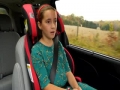
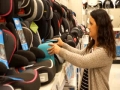
Thirteen out of 16 new booster seats for 2017 earn the Insurance Institute for Highway Safety's highest rating of BEST BET, bringing the total number of boosters on the market with that designation to 118.
The BEST BET rating means a booster provides good safety belt fit for typical 4 to 8 year-olds in almost any car, minivan or SUV. Boosters that are rated GOOD BETs provide acceptable belt fit in almost any vehicle, while those rated Check Fit could work for some children in some vehicles. Seats designated "Not Recommended" don’t provide good belt fit and should be avoided.