To speed progress against cancer and other diseases, the St. Jude Children’s Research Hospital – Washington University Pediatric Cancer Genome Project today announced the largest-ever release of comprehensive human cancer genome data for free access by the global scientific community. The amount of information released more than doubles the volume of high-coverage, whole genome data currently available from all human genome sources combined. This information is valuable not just to cancer researchers, but also to scientists studying almost any disease.
To view Multimedia News Release, go to http://www.multivu.com/mnr/52993-st-jude-childrens-research-hospital-comprehensive-human-cancer-genome-data
Janssen Healthcare Innovation, a team within Janssen Research & Development, LLC (Janssen), today announced Discharge Decision Support System (D2S2) is the winner of the crowdsourcing-inspired Janssen Connected Care Challenge and the $100,000 prize. D2S2 is a discharge decision support system that uses a proprietary algorithm to assemble and score key data upon hospital admission in order to identify patients who should be referred to post-acute care services to reduce the risk of 30-day readmissions.
To view Multimedia News Release, go to http://www.multivu.com/mnr/56342-discharge-decision-support-system-janssen-connected-care-challenge
A pill designed to zero in on abnormal genes that drive specific cancers has produced encouraging early results in children with an uncommon but aggressive type of lymphoma, as well as in children with a rare form of neuroblastoma.
A phase 1 clinical trial of the drug crizotinib achieved remissions, with minimal side effects, for 10 of the children participating in a clinical study carried out by the multicenter Children’s Oncology Group (COG). The results were “an exciting proof-of-principle” for the targeted treatment, said the study leader, Yaël P. Mossé, M.D., a pediatric oncologist at The Children’s Hospital of Philadelphia.
“We are entering a new era of cancer therapy, in which we use knowledge of basic biology to design very specific drugs that target cancer cells with potentially less side effects on healthy tissue,” said Mossé. “In addition, as we concentrate on targets in molecular pathways, we move away from an exclusive focus on one form of cancer to customizing treatments according to biological activity. Abnormal ALK activity occurs in subtypes of neuroblastoma and subtypes of lymphoma, so identifying ALK activity in individual patients may enable us to provide the most effective care.”
To view Multimedia News Release, go to http://www.multivu.com/mnr/50776-childrens-hospital-philadelphia-lymphoma-neuroblastoma-oncology-gene-trial
Bobby Hurley, former All-American guard at Duke and current assistant coach of the University of Rhode Island men’s basketball team, and Travis Ford, two-time SEC tournament MVP at Kentucky and current Oklahoma State University head coach, traded in their playbooks for chore lists at the “LG Home Court Challenge” during the NCAA® Final Four® weekend.
LG Electronics USA, an official Corporate Partner of the NCAA, hosted the competition and donated a total of $20,000 in the participating coaches’ names to Coaches vs. Cancer® and the MD Anderson Children’s Cancer Hospital.
To view Multimedia News Release, go to http://www.multivu.com/mnr/54895-ncaa-coaches-face-off-lg-home-court-challenge-men-s-final-four-weekend
Researchers have identified the first gene mutation associated with a chronic and often fatal form of neuroblastoma that typically strikes adolescents and young adults. The finding provides the first clue about the genetic basis of the long-recognized but poorly understood link between treatment outcome and age at diagnosis.
The study involved 104 infants, children and young adults with advanced neuroblastoma, a cancer of the sympathetic nervous system. Investigators discovered the ATRX gene was mutated only in patients age 5 and older. The alterations occurred most often in patients age 12 and older. These older patients were also more likely than their younger counterparts to have a chronic form of neuroblastoma and die years after their disease is diagnosed.
To view Multimedia News Release, go to http://www.multivu.com/mnr/52992-st-jude-pediatric-cancer-genome-project-neuroblastoma-research
http://www.youtube.com/watch?v=yXMddEIdusg[EXTRACT]
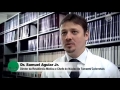
Dr. Samuel Aguiar Jr. - Hospital do Câncer - AC CamargoMédico do Departamento de Cirurgia Pélvicahttp://199.238.143.96/index.php?option=com_content&task=view&id=29&Itemid=33
Doctors at Children’s Hospital Boston are just another step closer to securing a cure for sickle cell disease thanks to a little help from some superstar friends. More than $1 million was raised in support of their research efforts on Sunday, January 15 during the “Play Without Pain: Children’s Sickle Cell Benefit,” a partnership with international megastar Celine Dion, Caesars Entertainment, AEG Live and Children’s Hospital Boston. Held at Caesars Palace, the evening included a performance of Celine Dion’s glamorous show directed by Grammy Awards producer Ken Ehrlich, including a touching tribute to sickle cell victims during her rendition of Billy Joel’s “Lullabye.”
To view Multimedia News Release, go to http://www.multivu.com/mnr/54153-celine-dion-play-without-pain-children-s-sickle-cell-benefit
New findings from the St. Jude Children’s Research Hospital – Washington University Pediatric Cancer Genome Project (PCGP) have helped identify the mechanism that makes the childhood eye tumor retinoblastoma so aggressive. The discovery explains why the tumor develops so rapidly while other cancers can take years or even decades to form.
The finding also led investigators to a new treatment target and possible therapy for the rare childhood tumor of the retina, the light-sensing tissue at the back of the eye. The study appears in the January 11 advance online edition of the scientific journal Nature.
To view Multimedia News Release, go to http://www.multivu.com/mnr/46767-st-jude-genome-project-treatment-childhood-eye-tumor-retinoblastoma
Researchers have discovered that a subtype of leukemia characterized by a poor prognosis is fueled by mutations in pathways distinctly different from a seemingly similar leukemia associated with a much better outcome. The findings from the St. Jude Children’s Research Hospital — Washington University Pediatric Cancer Genome Project (PCGP) highlight a possible new strategy for treating patients with this more aggressive cancer.
The work provides the first details of the genetic alterations fueling a subtype of acute lymphoblastic leukemia (ALL) known as early T-cell precursor ALL (ETP-ALL). The results suggest ETP-ALL has more in common with acute myeloid leukemia (AML) than with other subtypes of ALL. The study appears in the January 12 edition of the journal Nature.
To view Multimedia News Release, go to http://www.multivu.com/mnr/46768-st-jude-cancer-genome-sequencing-project-combat-aggressive-leukemia
Children’s Memorial Hermann Hospital and Cord Blood Registry® (CBR) are launching the first FDA-approved, Phase I safety study on the use of cord blood stem cells to treat children with sensorineural hearing loss.
To view Multimedia News Release, go to http://www.multivu.com/mnr/53686-cord-blood-childrens-memorial-hermann-fda-approved-stem-cells-hearing-loss
Smith & Nephew plc (LSE: SN, NYSE: SNN), the global medical technology business, announces the FDA clearance of the pocket-sized PICO◊ system, a single use Negative Pressure Wound Therapy (NPWT) system. PICO is cleared for use both in a hospital and homecare setting and expands the use of NPWT from the traditional wound care population to include a wider range of patients undergoing orthopaedic surgery, plastic surgery and general surgical procedures. This FDA clearance follows the recent successful launch of PICO in Europe, Canada, and Australia.
To view Multimedia News Release, go to http://www.multivu.com/mnr/51011-smith-nephew-pico-system-fda-approval-npwt
Prem Rabindranauth, MD, a heart surgeon at Gundersen Lutheran Health System in La Crosse, Wis., is using an exciting technique, called minimally invasive coronary surgery (MICS), to perform heart bypass surgery. To perform MICS, a very small three-inch cut is made between the ribs instead of the long cut through the breast bone that is needed with traditional open heart surgery. This means less pain and blood loss, fewer risks for problems, shorter hospital stays and quicker healing time.
To view Multimedia News Release, go to http://multivu.prnewswire.com/mnr/gundluth/49124/