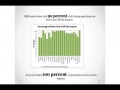
A new Obama administration regulation–the so-called Stream Protection Rule–is about to drive up energy costs and unemployment with no gain in environmental benefits, cautions the National Mining Association.
“The primary motive of this regulation is not to protect streams, as its title would suggest, but to protect federal regulators' jobs at the expense of coal miners' jobs as the nation's energy providers,” said Luke Popovich, vice president of communications for the National Mining Association.
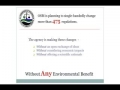
In a classic example of needless regulation, the U.S. Office of Surface Mining, or OSM, plans to change more than 475 regulations, as well as add more new rules – despite no demonstrated need. OSM has crafted the rule behind closed doors, Popovich said, shutting cooperating states out of discussions about the purpose and content of the regulation.
The new rule carries a heavy economic price tag, Popovich warned. He pointed to an analysis by an independent consultant that found that OSM’s rule would put more than 268,000 mining and dependent jobs at risk—adding to the 40,000 high-wage jobs already lost in the industry.
To view the multimedia release go to:
http://www.multivu.com/players/English/7221731-national-mining-association-americans-electricity-bill-increase-due-to-epa-regulations/
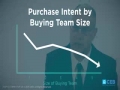
In order to succeed in today’s B2B sales world, salespeople must create buyer consensus among diverse customer stakeholders. Those who fail to do that risk falling victim to the status-quo – the minimal-risk, lowest-cost option – or worse, losing the deal altogether. The Challenger Customer: Selling to the Hidden Influencer Who Can Multiply Your Results from CEB (NYSE: CEB), a best practice insight and technology company, reveals that it isn’t just about how you engage, but who you engage within the customer organization that drives complex sales today.
“The ‘senior decision-maker’ no longer exists in B2B sales. That makes the most significant problem facing marketing and sales teams a buying problem, not a selling problem. Organizations need to shift their focus from making the sale to understanding buyer groups – and who among them really shapes decisions,” said co-author Brent Adamson, executive advisor at CEB. “Our research shows that the one thing that matters most to executives is whether or not a supplier has buy-in with the rest of the organization – NOT the supplier’s actual offering or solution.”
To view the multimedia release go to:
http://www.multivu.com/players/English/7427252-ceb-the-challenger-customer/
Union Pacific Railroad this week launched a new campaign exclusively on social media, urging drivers and pedestrians to think about their personal safety first and wait at grade crossings. New videos depict different scenarios in which a jogger, young couple and father and son are stopped, waiting for a train to pass. When the arms lift, each proceeds safely toward a spectacular future.
“Our message is straightforward – Your Life is Worth the Wait,” said Scott Moore, Union Pacific senior vice president – Corporate Relations. “Union Pacific trains operate in more than 7,300 communities; too often our employees see drivers or pedestrians sneak around the gates. Even after applying the emergency brakes, it can take a mile for a train to stop; the risk is never worth it.”
To view the multimedia release go to:
http://www.multivu.com/players/English/7508251-union-pacific-your-life-is-worth-the-wait/
Boston Scientific (NYSE: BSX) has received U.S. Food and Drug Administration (FDA) approval for the SYNERGY™ Bioabsorbable Polymer Drug-Eluting Stent System (BP-DES) for the treatment of coronary artery disease.
With this FDA approval, Boston Scientific will commence commercialization of the first and only BP-DES in the U.S. Notably, both the drug coating and the polymer – which modulates drug release – are fully absorbed shortly after drug elution is complete at three months.
The SYNERGY Stent provides synchronized drug and polymer absorption. It is designed to enable more rapid and complete arterial healing, and to thereby reduce the risk of complications associated with long-term polymer exposure compared to currently-used drug-eluting stents (DES) with permanent polymers.
To view the multimedia release go to:
http://www.multivu.com/players/English/7223456-boston-scientific-fda-approval-synergy/
The European Head and Neck Society (EHNS) and the Make Sense Campaign, today announced the launch of the Third Annual Head and Neck Cancer Awareness week (21–25 September). Through the pan-European Awareness Week, the EHNS and Make Sense Campaign promote education on head and neck cancer risk factors, disease prevention and disease signs and symptoms for both patients and healthcare professionals.
“Each year 350,000 people are diagnosed with head and neck cancer across Europe, and over half will not be alive after five years. However, if diagnosed and treated earlier, patients can have an 80 – 90% survival rate.” said Professor René Leemans, President of the EHNS and Professor and Chief of Otolaryngology – Head and Neck Surgery at VU University Medical Centre. “Through the Make Sense Campaign we are educating people about the early signs of the disease and encouraging them to seek professional help in a timely manner. Additionally, we are advocating for the best possible standards of patient care so that their outcomes can be optimised once they have been diagnosed with the disease.”
To view the multimedia release go to:
http://www.multivu.com/players/uk/7628151-support-head-neck-cancer-patients/
With September marking National Prostate Cancer Awareness Month and the kick-off of the 2015 NFL season, the Urology Care Foundation and the NFL have renewed their commitment to driving prostate health awareness, as well as teamed up to highlight a Public Service Announcement (PSA) focused on educating men about prostate cancer and encouraging them to take charge of their health through the Know Your Stats® campaign.
The Know Your Stats® campaign is a rallying force to connect, educate and inspire men across the country to know their prostate cancer risk and talk to their doctor about whether prostate cancer testing is right for them.
“It is important for men to know their risk and talk to their doctors so they can determine if prostate cancer testing is right for them,” said Richard A. Memo, MD, Chair of the Urology Care Foundation. “Having the tools and facts empowers individuals and their doctors to make informed decisions.”
Prostate cancer is the second most common cancer in America, affecting one in seven men. Odds increase to one in five if they are African American and one in three if they have a family history; however, the educational tools are making an impact. More men are talking with their doctors and getting tested, and fewer men are dying from the disease.
To view the multimedia release go to:
http://www.multivu.com/players/English/7365551-prostate-cancer-know-your-stats-psa/
The National Climate Assessment: Climate Change Impacts in the United States concludes that warmer and drier conditions have already contributed to increasing wildfire events across the western United States, and future increases are projected in some regions. Already this year, there have been over 44,000 wildfires that have damaged or destroyed almost 8.5 million acres. Long periods of record high temperatures are associated with droughts that contribute to dry conditions and drive wildfires in some areas.
USDA Secretary Vilsack recently stated, “This year, we are experiencing yet another devastating wildfire season, particularly in the drought-ravaged West. Climate change, drought, fuel buildup, insects and disease are increasing the severity of unprecedented wildfire in America's forests and rangelands, which impacts the safety of people, homes and communities. Development close to forests has also increased the threat to property, with more than 46 million homes in the United States, or about 40 percent of our nation's housing, potentially at risk from wildfire.”
To view the multimedia release go to:
http://www.multivu.com/players/English/7607931-fema-national-prepareathon/
This year, parents of nearly 16,000 children in the U.S. will hear the words: “Your child has cancer.” One in five of those children won’t survive. September is Childhood Cancer Awareness Month, and as a leader in the way the world understands, treats and defeats childhood cancer and other life-threatening diseases, St. Jude Children’s Research Hospital® will focus on raising awareness and funds for this very important issue.
Despite significant progress made by St. Jude Children’s Research Hospital, which has helped push the overall childhood cancer survival rates from 20 to more than 80 percent since the hospital opened in 1962, cancer remains the leading cause of death by disease for children over the age of 1. Each year about 175,000 children are diagnosed with cancer worldwide, and 60 percent of these kids don’t have access to modern treatment. For those who win their battles against childhood cancer, victory often comes at a cost as survivors face a much higher risk of experiencing unique long-term health effects later in life.
To view the multimedia release go to:
http://www.multivu.com/players/English/7390851-st-jude-hospital-childhood-cancer-awareness/
The Heart Rhythm Society (HRS), through its efforts during Atrial Fibrillation Awareness Month in September and throughout the year, is working to raise awareness of the increased prevalence of the disease and the associated risk of stroke in patients living with atrial fibrillation (AFib). Today, HRS releases a new public service announcement (PSA) as part of its ongoing work to educate Americans about AFib, the most common heart arrhythmia, and how it increases one’s risk of stroke fivefold. The PSA can be viewed by clicking here.
AFib affects more than three million Americans and it is estimated that 12 to 16 million Americans will have AFib by 2050. AFib occurs when the upper chambers of the heart (the atria) fibrillate, or “quiver,” which causes a rapid, irregular heart rhythm. The normal heart rate for an adult is between 60 and 100 beats every minute. When the heart is experiencing AFib, the atria can beat over 300 times every minute.
To view the multimedia release go to:
http://www.multivu.com/players/English/7312151-heart-rhythm-society-afib-stroke-psa/
A vastly changing landscape would certainly capture one’s attention. The nation’s trees face an immediate threat from the Asian longhorned beetle (ALB), a devastating invasive pest with no natural predators. With up to 70 percent of the U.S. tree canopy at risk of being lost to this pest, the U.S. Department of Agriculture (USDA) is spreading the word about the beetle this summer with a series of TV, radio and print public service announcements (PSAs).
The adult Asian longhorned beetle (ALB) is active throughout the summer months and into the fall. This invasive pest was first discovered in the U.S. in 1996, likely arriving here unknowingly inside wood packing material from Asia. The insect threatens recreational areas, forests, and suburban and urban shade trees. The beetle attacks 12 genera of trees, including birch, maple and elm. It is truly a landscape-altering invasive pest. And all states are at risk.
To view the multimedia release visit:
http://www.multivu.com/players/English/7569951-usda-psa-asian-longhorned-beetle/
A new advertising campaign from American Home Shield, the nation’s largest provider of home warranties, showcases the costly risk faced by millions of homeowners who may not fully understand the differences between homeowners insurance and home warranties, which protect consumers against potentially budget-busting covered breakdowns to their home systems and appliances.
To view the Multimedia News Release, go to http://www.multivu.com/players/English/7579651-servicemaster-american-home-shield/
Watch this video by NRMA for top tips on motorcycle lane filtering, to keep you safe and moving on NSW roads.
NRMA offer comprehensive motorbike insurance, providing you with cover for your bike against any accidental damage, collision or crashes.
In NSW, lane filtering became legal as of the 1st July 2014. In heavy traffic on multi-lane roads, riders often filter between the lanes. It can be an efficient way to road your motorcycle when done correctly.
1. When you are lane-filtering look out for drivers on both sides.
2. Watch for body language as an indication that they are about to change lanes.
3. Get your speed right. While it may be legal to travel at 30km an hour, it may not be safe to do so.
4. Never ride to the left of a vehicle; it puts you at risk of a collision with a vehicle entering a driveway.
5. Be aware of circumstances where it is still illegal to filter lanes, this includes active school zones.
Accidents happen and if you ride a motorbike or scooter then a motorcycle insurance policy could cover someone else’s property and your motorcycle, should you have an accident.
http://www.nrma.com.au/motorcycle-insurance