Pregnancy is an exciting time filled with hopeful anticipation, and most pregnancies are uneventful and result in healthy babies. Pregnancy, however, is not entirely without risk, leading some expectant parents to worry about birth defects and whether they’ll give birth to a healthy baby.
Many birth defects are minor and easily treated. But about one in every 33 babies is born with a major birth defect, according to the Centers for Disease Control. Major birth defects may have a serious impact on development, functional ability and overall health. Throughout January, which is Birth Defects Prevention Month, BeSmartBeWell.com highlights pregnancy risks and preventable birth defects. At BeSmartBeWell.com medical experts, and real-life expectant moms, like Sharon, share information to help lower the risk for birth defects.
To view Multimedia News Release, go to http://multivu.prnewswire.com/mnr/birthdefects/50829/
BeSmartBeWell.com is leading the way in health education, helping people manage common, largely preventable health issues through compelling, documentary-style videos. Research shows that video storytelling is effective at changing people's habits and behaviors, and a number of prominent health organizations are collaborating with BeSmartBeWell.com in order to further health education via this powerful medium.
LoveIsRespect.org found everyday teens who were willing to speak candidly about dating abuse. In Dating Abuse: Teens Start Talking, these teens talk openly about dating abuse and the risks of being young and in love in today's fast-paced technological world.
To view Multimedia News Release, go to http://www.multivu.com/mnr/50837-be-smart-be-well-changing-how-people-see-health-issues
Walgreens (NYSE, NASDAQ: WAG) and the National Urban League (NUL), today announced the launch of the Walgreens Way to Well Health Tour with National Urban League as a charitable component of the Walgreens Way to Well Commitment®. The national tour will provide free health resources to residents in urban and minority communities who experience disproportionately higher rates of preventable disease. The service is free and insurance will not be billed.
To view Multimedia News Release, go to http://www.multivu.com/mnr/54971-walgreens-way-to-well-health-tour-with-nul
Hospital-acquired infections can be deadly – and many times preventable. Nearly every major public health organization agrees that ineffective “hand-hygiene” (hand washing or using disinfecting sprays, wipes or gels) is one of the most significant contributors to the problem. Further compounding the problem is the fact that compliance rates among caregivers are difficult to track and often found to be low.
Hill-Rom has developed a new system to help hospitals monitor hand-hygiene rates: the Hill-Rom® Hand Hygiene Compliance Solution. The new offering, which is now available to hospitals nationwide, provides real-time monitoring and staff reminders, simplifies reporting, and can use the same hardware and devices as other Hill-Rom real-time locating solutions.
To view Multimedia News Release, go to http://www.multivu.com/mnr/61990-hill-rom-launches-new-hospital-hand-hygiene-monitoring-solution
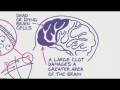
According to a new report, How Can We Avoid a Stroke Crisis in the Asia-Pacific Region?, urgent coordinated action is needed to avoid millions of preventable strokes, which leave many patients who have atrial fibrillation (AF) both mentally and physically disabled, or dead, every year.
The report, launched today during the 18th Asian Pacific Congress of Cardiology (APCC) by Action for Stroke Prevention, a group of health experts from across the globe, proposes urgent measures to prevent stroke in Asia-Pacific patients with AF, the most common, sustained abnormal heart rhythm and a major cause of stroke. The report’s recommendations are endorsed by 32 leading Asia-Pacific and other global medical societies and patient organizations, reinforcing and recognizing the need for a call to action.
To view Multimedia News Release, go to http://multivu.prnewswire.com/mnr/prne/strikeoutstroke/48909/
April showers bring May flowers but it also brings the potential for water in your basement. One of the worst experiences a homeowner can have is a backed-up sewer or drain filling the basement with foul-smelling water and sewage. Water losses are rising even though many of these accidents are preventable. In 2014, State Farm paid nearly $1.8 billion for water loss claims as a result of frozen pipes, flooded basements and burst appliance hoses, an increase from the $1.3 billion State Farm paid in 2013.
To view the Multimedia News Release, go to http://www.multivu.com/players/English/7452831-state-farm-weather-preparedness/
Allergan plc (NYSE:AGN), a global leader in eye care for nearly 70 years, today unveiled #EyePic, an exciting new online awareness campaign as part of the See America initiative to fight preventable blindness and visual impairment in the United States. #EyePic will use the power of social media to broaden awareness of preventable blindness, promote discussion around eye health and ultimately encourage all Americans to visit their eye doctors for comprehensive eye exams.
To view the multimedia release go to:
https://www.multivu.com/players/English/8134051-allergan-see-america-eyepic-campaign/
Each year, 40 percent of all injury-related emergency room visits and 42 percent of all injury-related deaths happen between May and August.* Additionally, one in four children ages 14 and younger will sustain an injury that requires medical attention. The good news is that most of these injuries are preventable with education and simple precautions.
To view the Multimedia News Release, go to http://www.multivu.com/mnr/7141051-shriners-hospital-for-children-nascar-david-ragan-summer-safety
Spring is around the corner, and it won’t be long before it’s prom and graduation seasons for many high schoolers. Rites of passage for many, these are times for teens to celebrate, but can also be times of poor decision-making, especially when vehicles are involved. The National Highway Traffic Safety Administration (NHTSA) reports that 2,524 teen drivers and passengers were killed and 177,000 were injured in 2013. Twenty-seven percent of these fatalities occurred between April and June, according to the Insurance Institute for Highway Safety (IIHS).
“The statistics are staggering, especially when you consider that most of these accidents and fatalities are preventable,” said Randy Petro, Mercury Insurance’s chief claims officer. “We don’t want any families to suffer through the loss of a child, so Mercury is taking action with the launch of the ‘Mercury Insurance Drive Safe Challenge.’”
The Mercury Insurance Drive Safe Challenge kicked off with a free defensive driving program, which included hands-on driving skills training and classroom material. An interactive website provides teens with detailed instruction, as well as gives parents the tools to shape responsible driving behavior.
To view the multimedia release go to:
http://www.multivu.com/players/English/7772251-mercury-teen-drive-safe-challenge/
Ahead of World Stroke Day 2012 (October 29), European Policy Makers have joined over 90 Medical and Patient Organisations, and more than 100,000 people, in supporting the Global Atrial Fibrillation (AF) Patient Charter and calling for National Governments and the World Health Organisation to act to make the prevention of AF-related strokes a priority. The Charter outlines ways to improve the diagnosis and management of AF which, if implemented, could stop thousands of preventable strokes from occurring each and every year.
To view Multimedia News Release, go to http://www.multivu.com/players/English/57497-sign-against-stroke/
Urgent coordinated action from national governments, medical societies and patient organizations is needed to avoid a public health crisis resulting from the tide of preventable strokes that leave many people with atrial fibrillation (AF) mentally and physically disabled or dead, every year. How Can We Avoid a Stroke Crisis in Latin America?, a report from Action for Stroke Prevention – a group of health experts from around the world - reveals the huge economic, social and personal burden of AF-related strokes across the region. Launched today at the International Society for Pharmacoeconomics and Outcomes Research (ISPOR) 3rd Latin America Conference, the report proposes measures to tackle stroke in patients with AF, the most common, sustained abnormal heart rhythm and a major cause of stroke.
To view Multimedia News Release, go to http://multivu.prnewswire.com/mnr/prne/strikeoutstroke/50549/
An international survey conducted by GSK and released for World Meningitis Day shows gaps in the knowledge parents feel they have about meningococcal disease and its potential consequences. Almost 7 in 10 parents said they don’t know enough about the different strains of meningococcal disease and the potential damage they can cause. On average, more than half of parents were either unsure or unaware that there are different types of bacteria that cause the disease.
The survey of 5,000 parents in Brazil, Canada, Germany, Italy and Portugal also shows that out of a list of 14 vaccine-preventable diseases, meningococcal disease is considered by many parents to pose a top three health risk to their children. Fifty-seven percent listed meningococcal disease among the top three health conditions they considered of greatest risk to children followed by Hepatitis B at 34 percent, pneumococcal disease at 27 percent, polio at 25 percent, tetanus at 20 percent and pertussis at 17 percent.
A sudden, potentially life-threatening illness, meningococcal disease kills on average one person every eight minutes worldwide. It typically manifests as bacterial meningitis – an infection of the membrane around the brain and spine; or bacteraemia – a bloodstream infection. The disease progresses rapidly and it can lead to death within 24-48 hours of the first symptoms; globally up to 1 in 10 of those infected may die and in the US about 10-15 percent of people will die.
To view the multimedia release go to:
http://www.multivu.com/players/uk/7814851-gsk-survey-world-meningitis-day/