A Princess of Roumania fantasy, with an extraordinary, intense, compressed SF novel in three parts, each set in its own alternate-history universe. The sections are all rooted in Virginia and the Battle of the Crater, and are also grounded in the real history of the Park family, from differing points of view.
The first section is set in the aftermath of the Civil War, in a world in which the Queen of the North has negotiated a two-nation settlement. The second, taking place in northwestern Massachusetts, investigates a secret project during World War II, in a time somewhat like the present. The third is set in the near-future United States, with aliens from history.
The cumulative effect is awesome. There hasn’t been a three part novel this ambitious in science fiction since Gene Wolfe’s classic The Fifth Head of Cerberus. Find out more at http://us.macmillan.com/allthosevanishedengines/PaulPark Fantasy/Scifi
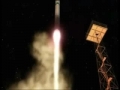
DEIMOS-2, Spain's first ultra-high resolution satellite launched into orbit on 19 June, has started capturing its first images just 12 hours after it was brought on line.
DEIMOS-2, which was launched from the launch site at Yasny (Russia), was developed by Elecnor Deimos in a record time of just three years. The company built an innovative Satellite Integration and Operations Centre in Puertollano (Spain) to assemble and subsequently control DEIMOS-2. As a result, this project completes Elecnor Deimos' presence in the entire value chain for space missions. Elecnor Deimos has the capability to manage entire space programs: design, integrate, validate, launch and operate Earth observation satellites; use them for commercial purposes and develop them for third parties.
To view the Multimedia News Release, go to http://www.multivu.com/mnr/71400573-elecnor-deimos-2-satellite-images
The Egyptian Ministry of Antiquities is pleased to announce the launch of an egyptian – international Project using non-invasive and non-destructive surveying techniques for the scanning of Egyptian Pyramids under the title “ScanPyramids” project.
Just because a mystery is 4500 years old doesn’t mean it can’t be solved…” This could be the motto of the exceptional scientific mission launched October 25, 2015, under the authority of the Egyptian Ministry of Antiquities, initiated, designed and coordinated by the Faculty of Engineering of Cairo and the French HIP.Institute (Heritage, Innovation and Preservation). Radiographic muons, aka cosmic particles, infrared thermography, photogrammetry, scanner and 3D reconstruction: the most innovative technologies will be used by researchers of international renown and three major universities: the Faculty of Engineering of Cairo University, Université Laval of Quebec and Nagoya University of Japan. Their goal: to probe the heart of the largest pyramids of Egypt, without drilling the slightest opening.
Four millennia after their construction, these ancient giants are far from having yielded their secrets. The first mystery concerns their construction, especially Khufu, the last of the Seven Wonders of the Ancient World still existing: it is still impossible to describe with certainty how this stone monument, the largest ever built by humans, was erected.
The “ScanPyramids” project has already been approved by the permanent committee of the Ministry of Antiquities and has obtained all necessary permissions from concerned authorities. With a base of more than 5 hectares, its original height of almost 150 meters and a mass of 5 million tons, how was it possible to construct such a wonder in only 25 years?
To view the multimedia release go to:
http://www.multivu.com/players/uk/7671551-scanpyramids-project-launch-egyptian/