Hotels.com®, the expert in online hotel booking and home to more than 20,000 hotel destinations worldwide, released its biannual Hotel Price Index™ (HPI®), reporting on the most popular travel destinations and the average price paid by travelers while visiting those destinations.
The HPI is a regular survey of hotel prices in major city destinations across the world, based on hotels.com bookings. Prices reported are those actually paid by customers (rather than advertised rates) during the calendar year of 2011. On a global scale, hotel prices increased by 4 percent on average in 2011 over 2010, while average prices in North America increased 5 percent year-over-year, continuing the process of steady recovery from the lows of 2008. Entering the third consecutive year of moderate price rises for guests, the global average price is still lower than it was in 2005, such was the depth of the financial crash-inspired trough.
To view Multimedia News Release, go to http://www.multivu.com/mnr/52873-hotels-com-price-index-five-percent-rise-in-2011-in-north-america
I Blame the Insurance Companies and Their Agents for Not Thoroughly Explaining -- and Urging You to Buy -- the Most Important Insurance Protection Available in Texas
(They Won’t Tell You, So We Will!)
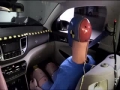
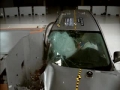
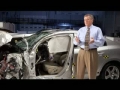
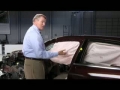
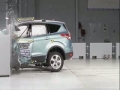
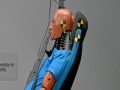
Drivers of vehicles with good small overlap front ratings from the Insurance Institute from Highway Safety can expect to be protected well in a frontal crash involving the left corner of the vehicle. But how would the passengers sitting next to them fare in a right-side small overlap crash? A new study shows that good protection doesn’t always extend across the front seat.
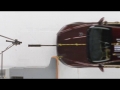
The Institute conducted 40 mph passenger-side small overlap tests on seven small SUVs with good driver-side small overlap ratings. Only one of the vehicles, the 2016 Hyundai Tucson, performed at a level corresponding to a good rating, and the others ran the gamut from poor to acceptable.
The results have prompted IIHS to consider instituting a passenger-side rating as part of its TOP SAFETY PICK criteria.
To view the multimedia release go to:
http://www.multivu.com/players/English/7856251-ad-council-embrace-refugees/
An early crop of advanced crash avoidance technologies includes some clear success stories when it comes to preventing crashes, insurance claim analyses by the Highway Loss Data Institute (HLDI) show.
Forward collision avoidance systems, particularly those that can brake autonomously, along with adaptive headlights, which shift direction as the driver steers, show the biggest crash reductions. Lane departure warning appears to hurt, rather than help, though it’s not clear why, and other systems, such as blind spot detection and park assist, aren’t showing clear effects on crash patterns yet.
HLDI analysts looked at how each feature affected claim frequency under a variety of insurance coverages for damage and injuries. Clear patterns were seen in claims under property damage liability (PDL) insurance, which covers damage caused by the insured vehicle to another vehicle, and collision insurance, which covers damage to the insured vehicle. Frequency is measured as the number of claims relative to the number of insured vehicle years. An insured vehicle year is one vehicle insured for one year, two vehicles for six months, etc. The model years of the vehicles included ranged from 2000 to 2011, depending on when an automaker introduced a feature. Insurance data through August 2011 were used.
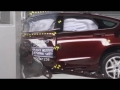
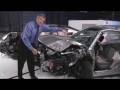
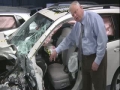
Only 3 of 11 midsize luxury and near-luxury cars evaluated earn good or acceptable ratings in the Insurance Institute for Highway Safety’s new small overlap frontal crash test, the latest addition to a suite of tests designed to help consumers pick the safest vehicles.
A group of moderately priced midsize cars outperformed most of their luxury counterparts in a challenging new frontal crash test conducted by the Insurance Institute for Highway Safety (IIHS) on 2013 models. Of the 18 midsize family cars evaluated in the small overlap test, two earn the top rating of good, 11 earn acceptable, three earn marginal, and two are poor.
In contrast, just 3 of 11 midsize luxury and near-luxury cars evaluated in the inaugural round of small overlap tests earned good or acceptable ratings. Midsize moderately priced cars are the second group to be tested. The best performers in this group are the Honda Accord 4-door and Suzuki Kizashi. Both earn a good rating.
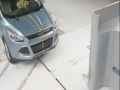
The 2014 Subaru Forester is the first vehicle to ace every aspect of the challenging small overlap front crash test conducted by the Insurance Institute for Highway Safety (IIHS). The Forester, the only 1 of 13 small SUVs to earn an overall rating of good in the test, and the 2013 Mitsubishi Outlander Sport, which earns acceptable, are the latest vehicles to qualify for the Institute’s recently inaugurated top honor, TOP SAFETY PICK+. Each of the other 11 SUVs earns either a poor or marginal rating.
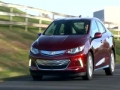
Two all-electric vehicles fall short of meeting the Insurance Institute for Highway Safety’s awards criteria, but consumers who want to minimize gas consumption while also prioritizing safety can choose from two plug-in hybrids that earn the 2017 TOP SAFETY PICK+ award.
The two recently evaluated all-electric models are the 2017 Tesla Model S and the 2017 BMW i3. The plug-in hybrid models are the Chevrolet Volt, whose award was announced in December, and the Toyota Prius Prime.
To qualify for the 2017 TOP SAFETY PICK award, a vehicle must earn good ratings in all five crashworthiness evaluations — small overlap front, moderate overlap front, side, roof strength and head restraints — and come with a front crash prevention system that earns an advanced or superior rating. The “plus” is awarded to vehicles that meet all those criteria and also come with good or acceptable headlights.