Wiping up finger paint and tackling juice spills is a routine every parent has down pat. Yet they may find themselves playing hide-and-seek with the invisible things little hands leave behind—like bacteria and viruses. Germs stick to all types of surfaces, and kids spread them to more places than you can imagine.
To track down where germs linger, The Clorox Company and global public health organization NSF International conducted a study in homes of families with young children. Researchers analyzed 100 samples from five commonly-touched surfaces, and found bacteria or viruses on all five of the surfaces tested, from the kitchen to the common area to the bathroom, with the bathroom sink being one of the surfaces with the most germs. In fact, the study results found that four times as many households had bathroom sinks that were germier than kitchen countertops.
To view the Multimedia News Release, go to http://www.multivu.com/players/English/7359251-clorox-and-nsf-study-shows-which-surfaces-have-most-germs-in-homes-with-kids
Researchers have discovered that a subtype of leukemia characterized by a poor prognosis is fueled by mutations in pathways distinctly different from a seemingly similar leukemia associated with a much better outcome. The findings from the St. Jude Children’s Research Hospital — Washington University Pediatric Cancer Genome Project (PCGP) highlight a possible new strategy for treating patients with this more aggressive cancer.
The work provides the first details of the genetic alterations fueling a subtype of acute lymphoblastic leukemia (ALL) known as early T-cell precursor ALL (ETP-ALL). The results suggest ETP-ALL has more in common with acute myeloid leukemia (AML) than with other subtypes of ALL. The study appears in the January 12 edition of the journal Nature.
To view Multimedia News Release, go to http://www.multivu.com/mnr/46768-st-jude-cancer-genome-sequencing-project-combat-aggressive-leukemia
Researchers presenting at ASTRO 2015, the premier radiation oncology scientific event in the world, unveiled new data this week that could fundamentally change the way that early stage breast cancer is treated.
Results from a landmark prospective, randomized, multicenter phase III study conducted in Europe demonstrated that APBI brachytherapy leads to equivalent overall survival and local cancer control rates as compared to WBI after breast conserving surgery for selected patients with early stage breast cancers. These data were presented during the ASTRO official press conference and published in The Lancet, a leading high-impact global peer-reviewed medical journal.
“We have been confidently offering APBI brachytherapy to selected women for years based on numerous phase II, single site and large registry studies that have confirmed the clinical utility of site-specific radiation delivered in a condensed timeframe,” said Frank A. Vicini, M.D., radiation oncologist, 21st Century Oncology, Royal Oak, Mich. and contributing author to the 2009 and 2013 ASTRO and ABS APBI guidelines. “The results from this landmark, multicenter, prospective randomized clinical study are the first to offer the critical level one evidence necessary to drive the fundamental changes in breast conserving cancer treatment that patients and healthcare professionals have been demanding for years.”
To view the multimedia release go to:
http://www.multivu.com/players/uk/7661231-new-apbi-brachytherapy-data-at-astro-2015/
After the overwhelming success and popularity of the sold-out 2010 inaugural conference, Food for your Whole Life is back this year with an exciting lineup of renowned researchers and experts who will provide attendees with inspiring, insightful ideas and current, necessary information on health. The 2012 Food for your Whole Life health symposium will emphasize the effects of foods and food-based dietary patterns on health for the general population and specific groups while sharing new research and theories on nutrition. Attendees will leave with a sense of empowerment that will enable them to create better environments all around them and ultimately make healthy choices more attainable.
To view Multimedia News Release, go to http://www.multivu.com/mnr/54414-food-for-your-whole-life-health-symposium-new-york-city-2012
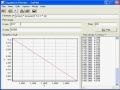
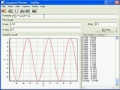
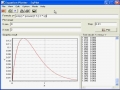
Graph plotter program plots 2D graphs from complex equations. The application comprises algebraic, trigonometric, hyperbolic and transcendental functions. EqPlot can be used to verify the results of nonlinear regression analysis program.
Equation graph plotter gives engineers and researchers the power to graphically review equations, by putting a large number of equations at their fingertips. The program is also indispensable for students and teachers.
A study conducted by researchers from the University of L’Aquila in Italy and Mars, Incorporated provides compelling new evidence that the regular consumption of dietary cocoa flavanols may improve cognitive function in elderly subjects with early memory decline. Just published online in the journal Hypertension, this current study significantly advances understanding of the benefits of flavanols by specifically exploring the impact of regular cocoa flavanol consumption on cognitive function in a population with Mild Cognitive Impairment (MCI). Previous research has suggested that the benefits of cocoa flavanols could extend to the brain. However, these studies were either only short-term or did not demonstrate a consistent cognitive benefit. This unique study addresses this gap and provides important insights into the possibility of slowing or even reversing cognitive declines associated with aging through consumption of these natural compounds.
To view Multimedia News Release, go to http://multivu.prnewswire.com/mnr/prne/marsincorporated/56580/
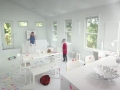
Researchers at Ann & Robert H. Lurie Children’s Hospital of Chicago, formerly Children’s Memorial, are embarking on a pioneering study to understand the extent to which healing spaces promote health and healing during hospitalization. A major focal point of the study will be the Crown Sky Garden, a 5-thousand square foot garden on the 11th floor of the 23 story hospital. The garden, named in honor of Chicago’s philanthropic Crown family, includes dozens of bamboo trees, an interactive wall that changes colors as people walk by and carved benches made from trees planted by Frederick Law Olmsted (designer of the famed Central Park) for the 1893 World’s Columbian Exposition in Chicago.
To view Multimedia News Release, go to http://www.multivu.com/mnr/58133-children-s-hospital-chicago-healing-spaces-study-crown-sky-garden
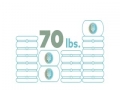
The modern cotton industry has achieved significant environmental gains over the past forty years, but it is not resting on its laurels. Around the world, scientists and researchers strive to develop new ways to grow, process and manufacture cotton more efficiently and with increasingly less impact on the environment. Identifying and implementing new technologies and practices will help the cotton industry meet the current needs for productivity and profit, without compromising the ability of future generations to meet their own needs.
Increasingly responsible production and manufacturing are not objectives the cotton industry take lightly. As a natural fiber, the success of cotton is directly linked to the land and its health. Being good stewards of the environment requires continuous attention to reducing impact throughout every link in cotton’s long supply chain—from the seeds from which cotton is grown, to the processing and manufacturing practices of finished cotton goods.
To view the multimedia release go to:
http://www.multivu.com/players/English/7613831-cotton-sustainability/
The bold and thrilling quest to finally understand the brain—and along with it our mental afflictions, from depression to autism—by a rising star in neuroscience
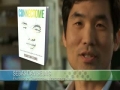
Sebastian Seung, a dynamic young professor at MIT, is at the forefront of a revolution in neuroscience. He believes that our identity lies not in our genes, but in the connections between our brain cells—our own particular wiring. Seung and a dedicated group of researchers are leading the effort to map these connections, neuron by neuron, synapse by synapse. It is a monumental effort—the scientific equivalent of climbing Mount Everest—but if they succeed, they will uncover the basis of personality, identity, intelligence, memory, and perhaps disorders such as autism and schizophrenia. Seung explains how this new map of a human “connectome” might even enable us to “upload” our brains into a computer, making us effectively immortal.
Connectome is a mind-bending adventure story, told with great passion and authority. It presents a daring scientific and technological vision for at last understanding what makes us who we are, both as individuals and as a species. Find out more here, http://bit.ly/yEBoyq Non-Fiction
In an effort to improve outcomes for patients with some of the deadliest childhood cancers, St. Jude Children’s Research Hospital scientists have created the world’s largest collection of pediatric solid tumor samples, drug-sensitivity data and related information and have made the resource available at no charge to the global scientific community.
St. Jude and the Howard Hughes Medical Institute collaborated to create the resource, known as the Childhood Solid Tumor Network. The work is reported today as an advance online publication in the scientific journal Nature.
“Survival rates for children with recurrent solid tumors have not improved significantly in more than 20 years and remain below 30 percent,” said corresponding author Michael Dyer, Ph.D., chair of the St. Jude Department of Developmental Neurobiology and a Howard Hughes Medical Institute investigator. “This research will change that by promoting scientific collaboration to leverage the efforts of researchers worldwide to advance understanding and ultimately treatment of pediatric solid tumors.”
To view the multimedia release go to:
https://www.multivu.com/players/English/8121952-st-jude-childrens-childhood-solid-tumor-network/
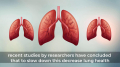
Despite a decrease in lung function as you age, recent studies by researchers have concluded that to slow down this decrease lung health, you need to continue to give yourself a good dose of,
Vitamin D
Vitamin C
Magnesium
Vitamin K
Researchers at global public health organization NSF International, Harvard Medical School, the United States Department of Defense and the National Institute for Public Health and the Environment in the Netherlands (RIVM) recently identified four unapproved, DMAA-like stimulants in six over-the-counter weight-loss and pre-workout products currently available online. The research was published in the peer-reviewed journal Clinical Toxicology.
The potentially harmful compounds – including banned stimulants 1,3-DMAA and 1,3-DMBA as well as octodrine and a newly identified DMAA analog – were not listed as ingredients in the products and may have been disguised as “2-aminoisoheptane” or extract of Aconitum kusnezoffii. These stimulants may cause adverse cardiac events, hemorrhagic strokes or sudden death, especially if taken prior to strenuous exercise or combined with caffeine. Extreme heat and dehydration may also increase the health risks.
To view the multimedia release go to:
https://www.multivu.com/players/English/8216951-nsf-international-banned-stimulants-2-aminoisoheptane/