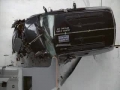
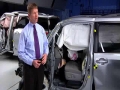
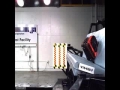
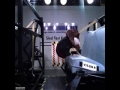
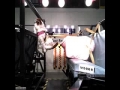
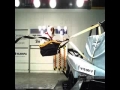
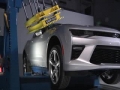
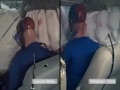
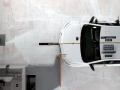
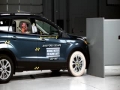
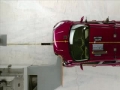
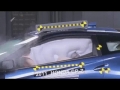
A group of four minivans recently tested by the Insurance Institute for Highway Safety for protection in small overlap front crashes shows some of the worst possible outcomes for this type of crash, with only one vehicle performing acceptably.
The Nissan Quest, the Chrysler Town & Country and its twin, the Dodge Grand Caravan, all earn poor ratings. The exception to the disappointing pattern is the 2015 Toyota Sienna, which earns an acceptable rating. It joins the Honda Odyssey, which last year earned a good rating in the test, in the ranks of TOP SAFETY PICK+ winners.
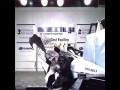
Subaru of America, Inc. and Center for Pet Safety (CPS), a registered 501(c)(3) non-profit research and consumer advocacy organization, announced today the results of the 2015 Crate and Carrier Crashworthiness Studies - a collaborative initiative to examine the effectiveness and safety of pet crates and carriers in the event of a crash. After several eye-opening and informative tests - including instances of complete failure - three top products emerged; CPS has selected the Gunner Kennels G1 Intermediate with 8’ Tie Down Straps as the 2015 Top Performing Crate and both the PetEgo Forma Frame Jet Set Carrier with ISOFIX-Latch Connection and Sleepypod Mobile Pet Bed with PPRS Handilock as the 2015 Top Performing Carriers.
To view the multimedia news release, go to http://www.multivu.com/players/English/7074157-subaru-pet-safety/
Subaru of America, Inc. today announced the completion of a Pet Travel Seat Pilot Study as part of its continued partnership with Center for Pet Safety (CPS), a registered 501(c)(3) non-profit research and consumer advocacy organization. Subaru and CPS have tested pet products most commonly used by pet parents when traveling. Phase one tested pet harnesses, phase two tested pet crates and carriers, and now, phase three has tested pet travel seats.
A pet travel seat is typically used in a vehicle to hold or elevate the pet, but does not offer full containment. The Pet Travel Seat Pilot Study found that while a pet travel seat may offer distraction prevention, it will likely not offer crash protection in the event of an accident, which could lead to injury of the pet and the human vehicle passengers. The quality of commonly available pet travel seats did not provide effective protection in a crash scenario.
Based on the scientific test evidence collected over the past four years, in part through its partnership with Subaru, CPS can now identify the safest travel options for most pets. For small dogs and cats, Center for Pet Safety recommends one of the 2015 Top Performing Carriers; for medium and large dogs either the 2015 Top Performing Crate - Gunner Kennels G1 Intermediate with 8' Tie Down Straps, or a Center for Pet Safety Certified Harness. To view top performing products and CPS Certified products, visit www.CenterforPetSafety.org.
To view the multimedia release go to:
http://www.multivu.com/players/English/7074158-subaru-cps-pet-travel-seat-study/
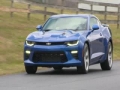
Think “muscle car” performance, and images of speed and power are more likely to come to mind than crash tests and safety ratings. Because no one buys a sports car to drive in the slow lane, the best all-¬ around occupant crash protection is crucial. The Insurance Institute for Highway Safety (IIHS) recently put a trio of iconic sports coupes through their paces, and unlike more sedate sedans, none earns the scores needed to clinch a TOP SAFETY PICK award.
IIHS evaluated 2016 models of the Chevrolet Camaro, Dodge Challenger and Ford Mustang in the full battery of crashworthiness evaluations. The Mustang comes closest to earning TOP SAFETY PICK, while the Camaro falls shortin one category and lacks an available front crash prevention system. The Challenger is most in need of improvement.
To qualify for TOP SAFETY PICK, vehicles must earn good ratings in the small overlap front, moderate overlap front, side, roof strength and head restraint evaluations and have a basic-¬rated front crash prevention system. To qualify for the Institute’s highest award, TOP SAFETY PICK+, vehicles must earn good ratings in the five crashworthiness tests and an advanced or superior rating for front crash prevention.
A new crash test program from the Insurance Institute for Highway Safety aims to ensure that manufacturers pay attention to the safety of front passengers as well as drivers.
The test was developed after it became clear that some manufacturers were giving short shrift to the right side of the vehicle when it comes to small overlap front crash protection. A good or acceptable passenger-side rating will be required to qualify for the Institute’s 2018 TOP SAFETY PICK+ award.
The first test group in the passenger-side small overlap front test program did better overall than vehicles IIHS previously evaluated for research. Ten out of 13 midsize cars tested earn a good rating, while one is acceptable and two earn a marginal rating.
In contrast with a group of 2014-16 model small SUVs tested for research, none of the 2017-18 midsize cars had a poor or marginal structural rating. Instead, the biggest problem in the new group was inconsistent airbag protection in five cars, which would put passengers’ heads at risk.
Parking crashes usually don’t result in serious injuries, but repair costs can quickly mount, along with the hassle of going without the family vehicle while waiting for the body shop to finish work. The Insurance Institute for Highway Safety has launched a rear crash prevention ratings program to help consumers identify models with the technology that can prevent or mitigate low-speed backing crashes. Two systems earn the highest rating of superior, and four earn the second-highest rating of advanced.
Rear crash prevention encompasses several technologies. Parking sensors issue warning beeps and/or seat vibrations when the equipped vehicle gets too close to another vehicle or object directly behind it, or, in some cases, in front of it. Rear cross-traffic alert warns drivers of approaching vehicles that might cross their path as they back up. Rear automatic emergency braking systems detect objects behind a reversing vehicle and may automatically brake if the driver doesn’t heed alerts to stop.
IIHS engineers evaluated rear autobrake systems on six popular 2017 model vehicles — the BMW 5 series sedan, Cadillac XT5 SUV, Infiniti QX60 SUV, Jeep Cherokee SUV, Subaru Outback wagon and Toyota Prius hatchback.
Under the three-tier rating scheme, models with optional or standard rear crash prevention systems are rated superior, advanced or basic. Ratings are determined by whether the vehicles have available rear autobrake and, if so, how it performs in a series of car-to-car and car-to-pole tests with different approach angles. The availability of parking sensors and rear cross-traffic alert also is factored in.
The Outback and XT5 earn a superior rating when equipped with optional rear autobrake, parking sensors and rear cross-traffic alert. The Cherokee, 5 series, QX60 and Prius earn an advanced rating with this optional gear.
In a new round of evaluations, 5 of 7 small SUVs earn good ratings from the Insurance Institute for Highway Safety for occupant protection in a passenger-side small overlap front crash.
The ratings bring to 16 the number of small SUVs the Institute has evaluated in the passenger-side small overlap front test, which was introduced in 2017 to encourage manufacturers to offer the same level of protection for front-seat passengers as drivers in this type of crash.
The BMW X1; Chevrolet Equinox and its twin, the GMC Terrain; Jeep Compass and Mitsubishi Outlander earn good ratings in the passenger-side small overlap front test. The Mitsubishi Outlander Sport earns a marginal rating, and the Ford Escape earns poor. For the 2018 model year, the Equinox shed weight to join the small SUV size class. Earlier models were classified as midsize.
None of the newly rated 2018 models earns better than acceptable marks for structure. (The Honda CR-V and Mazda CX-5 are the only small SUVs evaluated so far to earn good ratings for structure in the passenger-side small overlap front test.) The Outlander Sport is marginal, and the Escape is rated poor. Both the Outlander Sport and Escape allowed too much intrusion into the occupant compartment on the right side.
Six of 13 small cars recently evaluated by the Insurance Institute for Highway Safety earn the TOP SAFETY PICK award, and none earn a poor rating in any of 4 tests. This is a turnaround from a few years ago when small cars struggled to earn top safety ratings. The new tests include hybrids and gasoline-only models that are among the most fuel-efficient vehicles available in the U.S. market.
The ratings are based on performance in front, side, rollover, and rear impact evaluations. Cars that earn the top rating of good in each test and have available electronic stability control (ESC) qualify for TOP SAFETY PICK. Winners are the 2012 Ford Focus and Honda Civic, along with the 2011 Hyundai Elantra, Lexus CT 200h hybrid, Nissan Juke, and Toyota Prius hybrid. The Civic, CT 200h, Elantra, Focus, and Prius have at least one version with a government fuel economy rating of at least 40 miles per gallon on the highway. The Dodge Caliber, Honda CR-Z and Insight hybrids, Nissan Sentra and Versa, Scion xD, and Suzuki SX4 also were rated but didn’t earn TOP SAFETY PICK.
The elegant design possibilities are the most visually evident – but far from the only – advantages of Volvo Car Group’s new Scalable Product Architecture (SPA).
The ingenious new architecture also enables the company to reinforce its safety leadership and increase its momentum towards the aim that by 2020, no one should be killed or seriously injured in a new Volvo.
To view Multimedia News Release, go to http://www.multivu.com/mnr/64160-volvo-car-crash-free-future