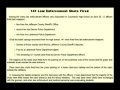
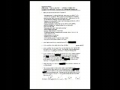
\The Columbine Cause\ by Evan Long raises questions about the April 20, 1999 attack on Columbine High School which have gone unaddressed or unanswered by corporate and state media, including:
Why do counts of the ballistics evidence charts yield totals far greater than the three hundred-odd shots officially stated by law enforcement officials to have been fired?
Why did students and teachers inside the school during the attack describe up to a dozen distinct shooters, some of whom some of them were able to identify by name as neither Eric Harris nor Dylan Klebold?
Why were the people of the world told that the attack was a \wake-up call\ when some Columbine students knew it to have been \the big rumor\ for up to two years in advance?
There is much more to the story of the attack on Columbine than has been widely made known.
http://www.xmail.net/evanlong/tcc/
\\\The Columbine Cause\\\ by Evan Long raises questions about the April 20, 1999 attack on Columbine High School which have gone unaddressed or unanswered by corporate and state media, including:
Why do counts of the ballistics evidence charts yield totals far greater than the three hundred-odd shots officially stated by law enforcement officials to have been fired?
Why did students and teachers inside the school during the attack describe up to a dozen distinct shooters, some of whom some of them were able to identify by name as neither Eric Harris nor Dylan Klebold?
Why were the people of the world told that the attack was a \\\wake-up call\\\ when some Columbine students knew it to have been \\\the big rumor\\\ for up to two years in advance?
There is much more to the story of the attack on Columbine than has been widely made known.
http://www.xmail.net/evanlong/tcc/
Chestnuts roasting on an open fire, boughs of holly and sleigh bells ringing: the holiday season is upon us and everyone has favorite aspects of the season they look forward to this time of year. Almost three in five Americans (58%) say the one thing they most look forward to with the holidays is spending time with family and friends. One in ten say it is holiday dinners and parties (9%) and fewer numbers say they most look forward to finding and giving presents (6%), putting up holiday decorations (5%), watching television specials, hearing holiday songs on the radio (5%) and getting presents (3%). One in ten U.S. adults (9%) say they do not look forward to the upcoming holidays.
To view Multimedia News Release, go to http://multivu.prnewswire.com/mnr/harrisinteractive/44736/
A new national survey released today shows large percentages of science teachers and parents strongly agree that demonstrating real-life applications in science (87 percent and 72 percent, respectively) can help make science education more interesting for U.S. students. Almost all science teachers (99 percent) and nine in ten parents (90 percent) feel that science education is important, if not very important for a child’s future, but that it needs to be more engaging to capture the attention of children in America today (97 percent and 96 percent, respectively). The survey, conducted online by Harris Interactive on behalf of iBIO Institute and Astellas Pharma US, Inc. (“Astellas”) included a sample of 235 science teachers and 300 parents with school-age children in kindergarten through 12th grade.
To view Multimedia News Release, go to http://multivu.prnewswire.com/mnr/astellas/46023/
Despite the economic crisis in the U.S. which has put many out of work and forced others to accept decreased benefits and pay, two in five Americans (41%) say this Thanksgiving they feel that they have more to be thankful for than a few years ago. Another two in five (41%) say they have about as much to be thankful for this Thanksgiving, compared to a few years ago and just over one in ten (13%) say they have less to be thankful for this year; 5% say they are not sure.
These are some of the results of The Harris Poll of 3,084 adults surveyed online between October 11 and 18, 2010 by Harris Interactive.
To view Multimedia News Release, go to http://multivu.prnewswire.com/mnr/harrisinteractive/44735/
\The Columbine Cause\ by Evan Long raises questions about the April 20, 1999 attack on Columbine High School which have gone unaddressed or unanswered by corporate and state media, including:
Why do counts of the ballistics evidence charts yield totals far greater than the three hundred-odd shots officially stated by law enforcement officials to have been fired?
Why did students and teachers inside the school during the attack describe up to a dozen distinct shooters, some of whom some of them were able to identify by name as neither Eric Harris nor Dylan Klebold?
Why were the people of the world told that the attack was a \wake-up call\ when some Columbine students knew it to have been \the big rumor\ for up to two years in advance?
There is much more to the story of the attack on Columbine than has been widely made known.
http://www.xmail.net/evanlong/tcc/
New data revealed that nearly 100 percent (99%) of 200 U.S. primary care physicians surveyed agree that heart disease and stroke are the number one cause of death and disability among type 2 diabetes patients; however, almost 40 percent (36%) of these physicians underestimate the number of patients who die from cardiovascular disease. Furthermore, while people with diabetes are two to four times more likely to have heart disease than people without diabetes, the survey, conducted by Harris Interactive and supported by Merck, found only one out of five (21%) patients (n=664) listed heart attack or heart failure as their biggest worry regarding diabetes complications, and even fewer patients (7%) listed stroke.
To view Multimedia News Release, go to http://multivu.prnewswire.com/mnr/merck/50638/
One thousand women die daily due to pregnancy related causes and the majority of Americans (75%) believe that reducing these deaths should be a priority of President Obama and his Administration, according to a study just released by Americans for UNFPA, conducted by Harris Interactive². Further, over eight in ten agree that lack of adequate healthcare is one of the most serious global issues facing women (82%).
To view Multimedia News Release, go to http://multivu.prnewswire.com/mnr/harrisinteractive/44730/
There are many big changes people can make to save money – cut back on all entertainment, for example. But there are also a number of smaller things people can do to save money, and with the economy not yet turning around, it seems many Americans have opted for this approach. Almost two-thirds of U.S. (65%) adults say they are purchasing more generic brands to save money, slightly up from February when 63% said they were doing this.
To view Multimedia News Release, go to http://multivu.prnewswire.com/mnr/harrisinteractive/44726/
Now diabetics can have their cake and eat it too thanks to pastry chef and diabetic Stacey Harris and her simple four-part substitution system that turns any decadent dessert into a diabetic-friendly delight. The Diabetic Pastry Chef Stacey Harris Book Trailer Find out more about this author here http://www.diabeticpastrychef.com/ Find out more about this book http://tinyurl.com/yh6xspt Genre: Non-Fiction
Maybe parents don’t know their teens as well as they think. According to a new 30 Hour Famine study, less than one in ten parents of teens (9%) describe teenagers today as “generous”. More than half of parents (58%) describe teenagers as “lazy”, and almost as many (54%) describe teens as “selfish”. And yet more than half of those teens themselves (53%) say the current economic climate has made them more aware of the needs of others. And almost nine out of ten (89%) of teens in the same online survey, conducted by Harris Interactive in January, say they wish they could do more to help those in need.
To view Multimedia News Release, go to http://multivu.prnewswire.com/mnr/worldvision/42471/
As of last week, Twitter’s 105 million users had collectively sent 15 billion tweets. Earlier this year, Facebook reached over 400 million active users—more members than the populations of Japan, Mexico and Russia, combined. Given these numbers, it's not surprising that nearly two-thirds (64%) of online Americans use social media, and most social media users (84%) reveal information about themselves via social media channels.
To view Multimedia News Release, go to http://multivu.prnewswire.com/mnr/harrisinteractive/44373/