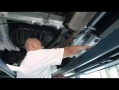
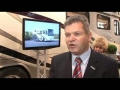
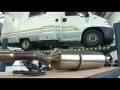
Just in time to the increase in prosperity of well known economic institutes
the caravaning industry also comes along with a smile on its face. The
business-fair about mobile homes, caravans and camping offers everything for
the unbelieably solvent customer down to the economically priced model with
a Dacia Logan base. But there are also news for the nearly ancient mobile
homes: filters for carbon-particulate matter to upgrade cleaning systems for
exhaust-emissions. A brighter future for old diesel-engines in Germany.
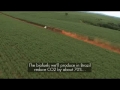
Shell and Cosan today launched a multi-billion dollar joint venture that will become a leading producer of the low-carbon biofuel, ethanol made from sugar cane. Named Raízen, this major retail and commercial fuels company will operate in Brazil, one of the world's fastest-growing markets.
In one of the biggest biofuels deals to date, Shell is combining its extensive retail experience, global network and research in advanced biofuels with Cosan's technical knowledge of producing biofuels on a large scale. Raízen will produce and sell over 2 billion litres a year of the lowest-carbon biofuel commercially available - ethanol made from Brazilian sugar cane.
To view Multimedia News Release, go to http://multivu.prnewswire.com/mnr/prne/shell/48921/
The banana is transported by plane, eggs by refrigerated trucks and yogurt can be found in open fridges, so to speak – the bottom line: In order to maintain a certain standard in a supermarket you are forced to use a lot of energy. An increasing number of supermarket owners have recognized responsibility and have started saving energy. For example, the Swiss cooperative Coop has set itself the goal of having all of their supermarkets being carbon-neutral by the year 2023.
The video documentations visualize and explain the official Munich 2018 bid documents. Following the first edition on “”, the second “Living Bid Book” is now available on
These materials are already known for their use in race cars and other lightweight vehicles: Carbon fiber or other high-tech plastics. Light, stable and economical. Now, especially in the context of energy consumption automakers are losing their fear of man made materials - formerly known as
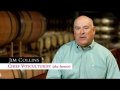
If sustainability is a journey, Frei Brothers Reserve has covered quite a bit of ground over the past year, expanding its sustainability focus from what’s in the bottle to the bottle itself. New earth-friendly packaging is showing up in stores now, just as the winery releases its first-ever “Earth Day Report.” The report shares how far Frei Brothers has come — and how far it wants to go — in its pursuit of “preserving natural resources without compromising the integrity of the wine.”
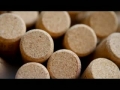
The line-up of eco-upgrades for the brand includes bottles that use less glass, corks that use more of the tree, and capsules and labels that create less waste.
To view Multimedia News Release, go to http://www.multivu.com/mnr/55463-frei-brothers-reserve-sustainable-packaging-earth-day-activities
Coca-Cola Enterprises (NYSE/NYSE Euronext Paris: CCE), which produces, markets and distributes Coca-Cola products in Western Europe, is today announcing two new initiatives aimed at improving recycling behavior and infrastructure, as part of its journey to becoming a low-carbon, zero-waste business. CCE’s sustainability plan commits it to setting the standard for sustainable packaging, achieving zero waste in its own operations and recycling more packaging than it uses.
To view Multimedia News Release, go to http://www.multivu.com/mnr/56620-coca-cola-enterprises-sustainability
Shell today announced that it will go ahead with the first carbon capture and storage (CCS) project for an oil sands operation in Canada. The Quest project will be built on behalf of the Athabasca Oil Sands Project joint venture owners (Shell, Chevron and Marathon Oil) and with support from the Governments of Canada and Alberta.
CCS is critical to meeting the huge projected increase in global energy demand while reducing carbon dioxide (CO2) emissions, explained Peter Voser, Chief Executive Officer of Royal Dutch Shell plc. “If you want to achieve climate change goals, CCS has to be part of the solution. We are helping to advance CCS technology on a number of fronts around the world, but Quest will be our flagship project.”
To view Multimedia News Release, go to http://multivu.prnewswire.com/mnr/prne/shell-first-oil-sands-css-project/56586/
Mercedes-AMG schickt den neuen S 63 AMG ins Rennen: Die stärkste High-Performance-Limousine im Luxus-Segment setzt neue Akzente bei Fahrdynamik, Leichtbau und Effizienz. Garant für souveräne Fahrleistungen ist der AMG 5,5-Liter-V8-Biturbomotor mit 430 kW (585 PS) sowie 900 Newtonmetern Drehmoment – das stärkste Mitglied der BlueDIRECT Motorenfamilie. Durch intelligenten Leichtbau nach der Philosophie „AMG Lightweight Performance“ bringt der S 63 AMG bis zu 100 Kilogramm weniger auf die Waage als der Vorgänger. Die Kombination aus effizientem Antrieb und Absenkung des Fahrzeuggewichts führt zu einem Kraftstoffverbrauch von 10,1 bis 10,3 Litern je 100 Kilometer nach NEFZ gesamt. Auf Wunsch ist der S 63 AMG erstmals auch mit dem Performance-orientierten AMG Allradantrieb 4MATIC lieferbar. Damit ist nicht nur eine Verbesserung der Traktion verbunden – der S 63 AMG ist in seinem Segment in puncto Fahrdynamik eine neue Dimension. Bei Design und Ausstattung erfüllt der S 63 AMG höchste Ansprüche hinsichtlich Wertanmutung, Qualität und Perfektion. Die konsequente Umsetzung der Strategie AMG Lightweight Performance reduziert das Gewicht des S 63 AMG gegenüber dem Vorgängermodell um bis zu 100 Kilogramm. Erzielt wurden die Einsparungen vor allem durch den Einsatz einer leichten Lithium-Ionen Batterie, von AMG Leichtmetallrädern in Schmiedetechnologie sowie einer gewichtsoptimierten AMG Hochleistungs- Verbundbremsanlage. Zudem bestehen die komplette Außenhaut der S-Klasse einschließlich des Dachs sowie der Karosserie-Vorbau aus Aluminium. Der Einsatz einer Ersatzradmulde aus dem Formel-1-Werkstoff Carbon spart weitere vier Kilogramm. Auch beim Leistungsgewicht markiert der S 63 AMG mit 3,37 kg/PS die Spitze. Aus diesem Wert resultieren souveräne Fahrleistungen: Die Beschleunigung von null auf 100 km/h ist je nach Modellvariante in 4,0 bis 4,4 Sekunden erreicht; die Höchstgeschwindigkeit liegt bei 250 km/h (elektronisch begrenzt)
In this video you will see the reasons why you should use ethanol. Ethanol is the only option for an independent America, the best option for creating new jobs, reducing your carbon footprint. Your money will be spent to develop better technologies with even lower footprints and lower production costs, instead of spending your money to foreign countries.
Beim großen Golf GTI-Treffen am Wörthersee enthüllte Audi seinen TT ultra quattro concept - eine Technikstudie, die minimales Gewicht und maximale Sportlichkeit vereint. Diese Sportlichkeit bekamen die Fans auch von der breiten Palette der High-Performance-Cars geboten. Neben dem legendären Sport quattro S1 standen aktuelle RS-Modelle und reinrassige Rennboliden zur Schau. Und auch der Audi R18 e-tron quattro war am See dabei. Im Mittelpunkt des Audi-Auftritts stand aber das TT ultra quattro concept. Das Showcar vereint schlanke 1.111 Kilogramm Gesamtgewicht mit einem 2.0 TFSI-Motor, dessen 228 kW/310 PS und 400 Nm leichtes Spiel mit dem Coupé haben. Aus dem Stand katapultiert sich der TT ultra quattro concept in 4,2 Sekunden auf 100 km/h. Sein Leistungsgewicht von 3,6 kg/PS liegt auf dem Niveau reinrassiger Supersportwagen. Und es lohnt sich auch der Blick ins Detail, schließlich macht das Konzeptauto den automobilen Leichtbau sichtbar. Schon das aktuelle Serienauto mit einem Karosserie-Gewicht von nur 206 Kilogramm plus 98 Kilogramm für die Anbauteile ist ein Beleg für die hohe Leichtbau-Kompetenz von Audi. Für die Karosserie des Wörthersee-Showcars haben die Ingenieure aus Ingolstadt und Neckarsulm den Audi Space Frame (ASF) der aktuellen TT-Generation konsequent weiterentwickelt und die Karosseriestruktur noch einmal um 43 Kilogramm abgespeckt. Zusammen mit den optimierten Anbauteilen ergeben sich 100 Kilogramm Gewichtseinsparung. Die Kombination aus Leichtigkeit und Sportlichkeit spiegelt sich auch in der Optik wieder. Im Vergleich zum Serienmodell haben die Audi Designer die Konturen des Showcars noch einmal deutlich gestrafft. Mit seinen großen Spoilern stellt der TT ultra quattro concept seine Motorsport-Gene zur Schau. So ist der Fuß des Heckflügels als tragendes Bauteil aus gefrästem Aluminium gefertigt, der Flügel als funktionales Element hingegen aus sichtbarem Carbon. Zu den weiteren Highlights am Wörthersee zählte der neue Audi RS 6 Avant. Das Hochleistungsmodell der quattro GmbH bietet mehr Effizienz und stärkere Fahrleistungen bei verringertem Gewicht. Und natürlich durfte auch der neue RS 7 Sportback fehlen. Sein starkes Herz ist ebenfalls der 4.0 TFSI V8 Biturbo. Die Leistung von 412 kW / 560 PS liegt im Bereich von 5.700 bis 6.600 Umdrehungen an. Zwischen 1.750 und 5.500 1/min sind konstant 700 Nm Drehmoment verfügbar. Neben dem raketenartigen Schub ist der Sound ein wichtiger Bestandteil des Fahrerlebnisses: Auf Tastendruck und beim kräftigen Gas geben sorgen schaltbare Klappen in der Abgasanlage für einen noch volleren Klang, optional montiert Audi eine Sport-Abgasanlage. Ebenso auf dem Audi Stand präsentierte sich der neue Audi RS Q3 als erstes RS-Modell in der erfolgreichen Q Familie. Es ist das vierte Modell, das die quattro GmbH in diesem Jahr auf den Markt bringen wird. Mit dem 2.5 TFSI-Motor, der mit einer Spitzenleistung von 228 kW /310 PS aufwartet, steckt ein preisgekrönter Hochleistungsmotor unter der Haube des RS Q3.