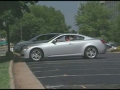
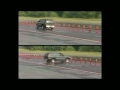
Volvo Cars of North America, LLC (VCNA) pulled the wraps off the all-new 2011 S60 sport sedan today at the New York Auto Show. The all-new Volvo S60 sport sedan will arrive at dealerships later this fall. The all-new S60 introduces a unique safety technology: Pedestrian Detection with Full Auto Brake.
To view Multimedia News Release, go to http://multivu.prnewswire.com/mnr/volvo/42856/
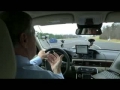
Volvo Cars will play a leading role in the world’s first large-scale autonomous driving pilot project in which 100 self-driving Volvo cars will use public roads in everyday driving conditions around the Swedish city of Gothenburg.
The aim is to pinpoint the societal benefits of autonomous driving and position Sweden and Volvo Cars as leaders in the development of future mobility.
To view Multimedia News Release, go to http://www.multivu.com/mnr/64153-volvo-self-driving-cars-unique-swedish-project
Volvo Car Group is now starting production of the first engine variants in the new, high-efficiency four-cylinder engine family. The development and production take place in-house at Volvo Car Group and form a vital part of the company’s strategy for independence.
The strategy of four-cylinder petrol and diesel engines and driveline electrification is the path that Volvo Cars has chosen for the future. With total control over the development and production of engines and drivelines and by reducing the number of engine variants, the result is increased flexibility and greater ability to influence quality.
To view Multimedia News Release, go to http://www.multivu.com/mnr/60659-volvo-produces-new-engine-family
In a ground-breaking technology move for the automotive industry, Volvo Cars demonstrates the world’s first delivery of food to the car – a new form of ‘roam delivery’ services. The service, which will be showcased at the Mobile World Congress, will allow consumers to have their shopping delivered straight to their car, no matter where they are.
Volvo’s new digital keys technology will allow consumers to choose their car as a delivery option when ordering goods online.
To view Multimedia News Release, go to http://www.multivu.com/mnr/65010-volvo-pilots-roam-delivery-service
The elegant design possibilities are the most visually evident – but far from the only – advantages of Volvo Car Group’s new Scalable Product Architecture (SPA).
The ingenious new architecture also enables the company to reinforce its safety leadership and increase its momentum towards the aim that by 2020, no one should be killed or seriously injured in a new Volvo.
To view Multimedia News Release, go to http://www.multivu.com/mnr/64160-volvo-car-crash-free-future
The creative collaboration between Swedish artist/producer Avicii and Volvo Cars for their new brand campaign features a reworking of the classic song Feeling Good. Filmed on location in Stockholm and Osterlen, southern Sweden, the video visits places of personal significance for Avicii and tells his own story of renewal, following several years of hard touring. The video also features members of his family and close friends.
“In the past six years I have been on a never-ending tour, apart for the last nine months during my time-out. I did around 325 shows in a year with traveling on top of that. It couldn’t continue. In the end I had to re-evaluate my situation and change my lifestyle. Sweden is an important place to me, it’s where I gather my strength and energy with family and friends. This whole process of re-evaluation and renewal is what Volvo encouraged me to visualise in the video. I think we did a great job together,” said Avicii.
To view the Multimedia News Release, go to http://www.multivu.com/players/English/7522051-volvo-cars-new-beginning-avicii/
Volvo delivers a unique combination of performance and efficiency with the High Performance Drive-E Powertrain Concept - a triple boost 2-liter 4-cylinder petrol engine with no less than 450 hp.
Following the successful introduction of Volvo’s Drive-E Powertrain range in 2013, Volvo’s powertrain team once again demonstrates its technological leadership in emission-reducing turbo technology.
“When we launched the Drive-E powertrain family, our aim was to deliver the most advanced 4-cylinder engines in the industry based on emissions and fuel consumption relative to performance and drivability. We knew that 320 hp in our petrol configuration was just a starting point. The 450 hp High Performance Drive-E Powertrain Concept, demonstrates this ambition and the versatility of the Drive-E Powertrains,” says Dr. Peter Mertens, Senior Vice President for Research and Development at Volvo Car Group.
To view the Multimedia News Release, go to http://www.multivu.com/players/English/72762550-volvo-reveal-drive-e-450hp-engine/
In a ground-breaking collaboration, Volvo Cars, protective gravity sports gear manufacturer POC and Ericsson will present an innovative safety technology connecting drivers and cyclists for the first time ever at International CES in Las Vegas (6-9 January 2015).
The technology consists of a connected car and helmet prototype that will establish 2-way communication offering proximity alerts to Volvo car drivers and cyclists and thereby avoid accidents. No car manufacturer has previously put a stake in the ground to help address the problem by using Connected Safety technology – until now.
To view the Multimedia News Release, go to: http://www.multivu.com/players/English/7404151-volvo-life-saving-cycling-tech/
The rate at which people file insurance claims for theft is highest for versions of the 2007-09 Cadillac Escalade, a luxury SUV, followed by the Ford F-250 crew pickup, Infiniti G37 luxury car, and Dodge Charger with a HEMI engine. Theft rates for these vehicles are 3 to 5 times as high as the average for all vehicles. These are the latest theft loss results for passenger vehicles 1 to 3 years old published by the Highway Loss Data Institute (HLDI), an affiliate of the Insurance Institute for Highway Safety.
Twenty-two vehicles earn the Insurance Institute for Highway Safety's highest safety award for 2014, TOP SAFETY PICK+, thanks to a high level of protection in crashes and the availability of front crash prevention technology to avoid many collisions in the first place. An additional 17 earn TOP SAFETY PICK by meeting the crashworthiness criteria alone.
IIHS is using new criteria for the awards this year. TOP SAFETY PICK requires good performance in the Institute's moderate overlap front, side, roof strength and head restraint tests and, for the first time, good or acceptable performance in the small overlap front test introduced in 2012. The same level of performance in those tests, along with at least a basic rating for front crash prevention, is required for the higher accolade, TOP SAFETY PICK+.
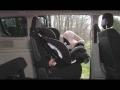
Installing child restraints can frustrate even the most capable of parents. A system called Lower Anchors and Tethers for Children is supposed to make things easier by standardizing attachment hardware, but a new study shows that many automakers aren’t paying attention to the key factors that make LATCH work. Only 21 of the 98 top-selling 2010-11 model passenger vehicles evaluated have LATCH designs that are easy to use. This is the main finding of joint research conducted by the Insurance Institute for Highway Safety and the University of Michigan Transportation Research Institute (UMTRI).
Adults have gotten the message that it’s safer for kids to ride in the back seat properly restrained, but when it comes to their own safety, there is a common misperception that buckling up is optional. Among adults who admit to not always using safety belts in the back seat, 4 out of 5 surveyed by the Insurance Institute for Highway Safety say short trips or traveling by taxi or ride-hailing service are times they don’t bother to use the belt.
The new survey reveals that many rear-seat passengers don’t think belts are necessary because they perceive the back seat to be safer than the front. This shows a clear misunderstanding about why belts are important, no matter where a person sits in a vehicle.
Before the majority of Americans got into the habit of buckling up, the back seat was the safest place to sit, and the center rear seat was the safest place of all in 1960-70s’ era vehicles. In recent decades, high levels of restraint use, the advent of belt pretensioners, load limiters and airbags, plus crashworthy vehicle designs have narrowed the safety advantages of riding in the rear seat for teens and adults.