The 2018 Niro Plug-in Hybrid (PHEV) brings an exciting new dimension to Kia's alternative fuel car line-up. As Kia's third plug-in model, and anticipated in retailer showrooms by the end of this year, the Niro PHEV offers the same crossover utility, fun-driving and winning design of the Niro hybrid, but with an estimated 26-miles of All-Electric Range.1
“The Niro Plug-in is the exciting next step in Kia's progression toward offering more alternative fuel vehicles by 2020,” said Orth Hedrick, vice president, product planning, Kia Motors America (KMA). “Consumers who are intrigued by the Niro hybrid's fantastic versatility and design, but want even more EcoDynamics technology and the ability to drive only using electric power, will find more to love in the Niro Plug-in Hybrid.”
To view the multimedia release go to:
https://www.multivu.com/players/English/8016958-kia-niro-plug-in-hybrid-crossover-laas/
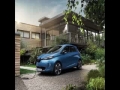
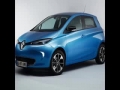
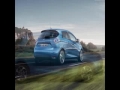
2017 Renault Zoe
Renault has introduced a new Z.E. 40 battery for ZOE. At the same, ZOE owners can benefit from a range of new connected services and equipment upgrades. Order books for the new ZOE line-up are open. The new ZOEs fitted with the new Z.E. 40 battery are made at Renault's Flins plant in France and will be available for delivery before the end of 2016.
Double the range for even longer journeys
As the pioneer of all-electric mobility and Europe's number one seller of electric vehicles, Renault has stepped up its innovation programme and the deployment of its Zero Emissions strategy.
Fitted with the new Z.E. 40 battery, the Renault ZOE now delivers a record NEDC driving range of 400km, which is twice the distance delivered by the model at the time of its original launch.
The new Z.E. 40 battery has a real-world range of 300 kilometres in urban or suburban areas, for example.
The range permitted today by the ZOE is the longest of any mainstream all-electric vehicle and motorists can take advantage of this step forward now.
The ZOE is the best-selling electric vehicle in Europe and provides a real alternative to internal combustion-engine cars, since average daily commuting distances are well within the ZOE's capabilities.
The new battery removes the final psychological barrier that stands in the way of buying an electric car since ZOE users can now travel further and enjoy a wider variety of driving situations without worry about charging. This makes weekend trips a real possibility.
The Z.E. 40 battery's charging rate is similar to that of the standard battery, so 'topping up' doesn't take long at all. For example, just 30 minutes are required on average to charge the battery for an extra 80 kilometres of driving range when plugged into one of the many public charging points in operation in Europe. The ZOE continues to be equipped with the Quick Charge function to take full advantage of the maximum capacity of fast charging points located predominantly along motorway corridors.
An innovation that doubles battery capacity with no increase in size
The ZOE's new Z.E. 40 battery boasts 41kWh of useful energy, equivalent to almost double the storage capacity of the ZOE's standard battery (22kWh of useful energy).
Developed in close partnership with LG Chem, the battery uses high-energy density lithium-ion technology.
Renault and LG engineers have succeeded in increasing storage capacity without making the battery any bigger or a lot heavier. It was optimised by working on the chemistry of the cells in order to increase their energy density, rather than stacking additional battery modules, a commonly used technique.
This major new technology has been developed while ensuring the battery's reliability or safety.
The battery's large storage capacity ensures longer range for the ZOE thanks to the meticulous work that went into integrating the battery in the vehicle. The electronic management system of the battery optimises the ZOE's energy use on the move, while the new air circulation system maintains the temperature of the ZOE's battery at a constant level, making the car economical to run in very hot or very cold weather.
Volvo Cars’ all-new XC90 – which will be revealed in August – will offer the most comprehensive and technologically sophisticated standard safety package available in the automotive industry. The new technologies will take the company a significant step closer to its vision that no one will be killed or seriously injured in a new Volvo car by 2020.
To view the Multimedia News Release, go to http://www.multivu.com/mnr/71400582-all-new-volvo-XC90-safest-car
Lexus is launching a compelling and progressive marketing campaign to introduce the 2013 Lexus ES, its top-selling sedan. The entirely new ES represents the latest step forward in Lexus design—including next-generation technologies in connectivity and safety, as well as the first-ever ES hybrid.
In the first general market spot, “Split World,” the 2013 ES makes its debut through mirrored images. Architecture, cyclists, trees and bridges create an eye-catching and intriguing world as the vehicle is gradually revealed, dynamically driving along and through this split world. The spot draws attention to the exterior, featuring the bold new styling and clean, sculpted lines of the car in a way that is fresh, unexpected and visually engaging.
To view Multimedia News Release, go to http://www.multivu.com/mnr/57768-lexus-es-2013-marketing-campaign