“Small Business Big Game" Ad Winner
Ad spending for commercials during Super Bowl 50, set to broadcast on CBS on Feb. 7, will total a record $377 million, according to Advertising Age Datacenter’s estimates. That’s more than the combined spend on all Super Bowl ads in the 1960s, '70s and '80s with a total of $299 million.
For all those interested in the pop culture phenomenon sure to unfold during Super Bowl’s commercial breaks, Advertising Age has launched its Super Bowl 50 Special Report. The hub, which will be updated daily before and several days after the game, is chock-full of news, trends, data and videos about the evolution of Super Bowl commercials over the last 50 years. It also includes a chart that lists every advertiser appearing during commercial breaks.
To view the multimedia release go to:
http://www.multivu.com/players/English/7737551-advertising-age-super-bowl-ad-trends/
Adults have gotten the message that it’s safer for kids to ride in the back seat properly restrained, but when it comes to their own safety, there is a common misperception that buckling up is optional. Among adults who admit to not always using safety belts in the back seat, 4 out of 5 surveyed by the Insurance Institute for Highway Safety say short trips or traveling by taxi or ride-hailing service are times they don’t bother to use the belt.
The new survey reveals that many rear-seat passengers don’t think belts are necessary because they perceive the back seat to be safer than the front. This shows a clear misunderstanding about why belts are important, no matter where a person sits in a vehicle.
Before the majority of Americans got into the habit of buckling up, the back seat was the safest place to sit, and the center rear seat was the safest place of all in 1960-70s’ era vehicles. In recent decades, high levels of restraint use, the advent of belt pretensioners, load limiters and airbags, plus crashworthy vehicle designs have narrowed the safety advantages of riding in the rear seat for teens and adults.
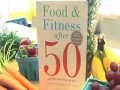
In the noisy, contradictory health-help arena, Food & Fitness After 50 gives readers simple and straightforward tools to eat well, move well and be well after 50.
The new title from the Academy of Nutrition and Dietetics counters ever-changing nutrition and fitness advice by untangling myths, answering vexing questions and simplifying science and research so readers can chart a clear, personalized pathway to enhanced health.
“Many people fall into habits that seem hard to change, but with a bit of planning and the realization that health matters, anyone can make meaningful changes to eat well, move well and be well at any age,” according to Food & Fitness After 50 co-authors Christine Rosenbloom, PhD, RDN, FAND, and Bob Murray, PhD, FACSM.
Divided into three sections that focus on diet, exercise and overall wellness, Food & Fitness After 50 translates scientific research into simple, actionable steps to control food choices and fitness strategies for adults in their 50s, 60s, 70s and beyond.
To view the multimedia release go to:
https://www.multivu.com/players/English/8191551-academy-of-nutrition-and-dietetics-food-fitness-book/