St. Jude Children’s Research Hospital®, uno de los principales centros de investigación y tratamiento del cáncer pediátrico se unió a Univision Radio, la mayor difusora de radio Hispana en los Estados Unidos, para realizar su evento radial anual Promesa y Esperanza®. Los radioyentes alrededor del país sintonizaron su estación favorita de Univision Radio el 7 y 8 de febrero y recaudaron más de $5.3 millones en efectivo y promesas monetarias. Los fondos recaudados ayudarán a cubrir los gastos de investigación y tratamiento del cáncer pediátrico y otras enfermedades terminales en los Estados Unidos, Puerto Rico y alrededor del mundo.
To view Multimedia News Release, go to http://www.multivu.com/mnr/58260-st-jude-childrens-research-hospital-univision-radio-promesa-y-esperanza
Lancôme is unveiling Genes Day on October 22, a one day fundraiser in support of St. Jude Children’s Research Hospital.
In celebration of the beauty of scientific research, Lancôme will donate $7 from each bottle of their latest skin care breakthrough, Génifique Youth Activating Concentrate, sold that day to St. Jude Children’s Research Hospital to support the research and treatment at St. Jude.
To view Multimedia News Release, go to http://multivu.prnewswire.com/mnr/lancome/46646/
EN ESTA TEMPORADA FESTIVA, ST. JUDE CHILDREN’S RESEARCH HOSPITAL TE INVITA A PARTICIPAR EN SU CAMPAÑA THANKS AND GIVING. ® UN PROGRAMA ANUAL QUE BUSCA CREAR CONCIENCIA Y RECAUDAR FONDOS PARA COMBATIR EL CÁNCER INFANTIL.
On October 21st, 2011, Lancôme invites customers to experience the “Beauty of Giving” by celebrating Genes Day, a one-day national event Lancôme began in 2010 to support St. Jude Children’s Research Hospital, one of the world’s premier centers for the research and treatment of pediatric cancer and other catastrophic childhood diseases. On this day, Lancôme will donate $7 from the sale of every bottle of Génifique Youth Activating Concentrate to St. Jude. (This is in addition to special promotions and events nationwide surrounding Genes Day throughout the month of October.)
To view Multimedia News Release, go to http://www.multivu.com/mnr/52300-lancome-genes-day-2011-st-jude-julia-roberts-genifique-beauty-of-giving
Researchers have discovered that a subtype of leukemia characterized by a poor prognosis is fueled by mutations in pathways distinctly different from a seemingly similar leukemia associated with a much better outcome. The findings from the St. Jude Children’s Research Hospital — Washington University Pediatric Cancer Genome Project (PCGP) highlight a possible new strategy for treating patients with this more aggressive cancer.
The work provides the first details of the genetic alterations fueling a subtype of acute lymphoblastic leukemia (ALL) known as early T-cell precursor ALL (ETP-ALL). The results suggest ETP-ALL has more in common with acute myeloid leukemia (AML) than with other subtypes of ALL. The study appears in the January 12 edition of the journal Nature.
To view Multimedia News Release, go to http://www.multivu.com/mnr/46768-st-jude-cancer-genome-sequencing-project-combat-aggressive-leukemia
New findings from the St. Jude Children’s Research Hospital – Washington University Pediatric Cancer Genome Project (PCGP) have helped identify the mechanism that makes the childhood eye tumor retinoblastoma so aggressive. The discovery explains why the tumor develops so rapidly while other cancers can take years or even decades to form.
The finding also led investigators to a new treatment target and possible therapy for the rare childhood tumor of the retina, the light-sensing tissue at the back of the eye. The study appears in the January 11 advance online edition of the scientific journal Nature.
To view Multimedia News Release, go to http://www.multivu.com/mnr/46767-st-jude-genome-project-treatment-childhood-eye-tumor-retinoblastoma
Researchers have identified the first gene mutation associated with a chronic and often fatal form of neuroblastoma that typically strikes adolescents and young adults. The finding provides the first clue about the genetic basis of the long-recognized but poorly understood link between treatment outcome and age at diagnosis.
The study involved 104 infants, children and young adults with advanced neuroblastoma, a cancer of the sympathetic nervous system. Investigators discovered the ATRX gene was mutated only in patients age 5 and older. The alterations occurred most often in patients age 12 and older. These older patients were also more likely than their younger counterparts to have a chronic form of neuroblastoma and die years after their disease is diagnosed.
To view Multimedia News Release, go to http://www.multivu.com/mnr/52992-st-jude-pediatric-cancer-genome-project-neuroblastoma-research
To speed progress against cancer and other diseases, the St. Jude Children’s Research Hospital – Washington University Pediatric Cancer Genome Project today announced the largest-ever release of comprehensive human cancer genome data for free access by the global scientific community. The amount of information released more than doubles the volume of high-coverage, whole genome data currently available from all human genome sources combined. This information is valuable not just to cancer researchers, but also to scientists studying almost any disease.
To view Multimedia News Release, go to http://www.multivu.com/mnr/52993-st-jude-childrens-research-hospital-comprehensive-human-cancer-genome-data
Research led by the St. Jude Children’s Research Hospital – Washington University Pediatric Cancer Genome Project has identified a fusion gene responsible for almost 30 percent of a rare subtype of childhood leukemia with an extremely poor prognosis.
The finding offers the first evidence of a mistake that gives rise to a significant percentage of acute megakaryoblastic leukemia (AMKL) cases in children. AMKL accounts for about 10 percent of pediatric acute myeloid leukemia (AML). The discovery paves the way for desperately needed treatment advances.
To view Multimedia News Release, go to http://www.multivu.com/mnr/58586-st-jude-children-s-research-hospital-gene-sequencing-childhood-leukemia
Evidence from the Childhood Cancer Survivor Study suggests that changes in childhood cancer treatment have reduced deaths from the late effects of cancer treatment and extended the lives of childhood cancer survivors. St. Jude Children’s Research Hospital investigators led the research, which will be presented today at the plenary session of the 2015 annual meeting of the American Society of Clinical Oncology (ASCO).
The study is one of four being featured at the plenary session press briefing, which highlights research that ASCO deems as having the highest scientific merit and greatest potential to affect patient care.
To view the Multimedia News Release, go to http://www.multivu.com/players/English/7532851-st-jude-cancer-research/
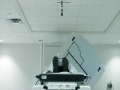
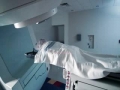
St. Jude Children’s Research Hospital® officials and guests today marked the opening of the St. Jude Red Frog Events Proton Therapy Center, the first proton therapy center in the world dedicated solely to children with cancer.
Patients are now being treated at the center using precisely delivered, high-energy particles called protons to kill or shrink tumors while minimizing damage to healthy tissue and organs. For patients with brain tumors and certain other cancers, research suggests proton beam therapy may be more effective than conventional radiation at preventing the growth and spread of tumors while reducing the risk of treatment-related side effects.
To view the multimedia release go to:
http://www.multivu.com/players/English/7713451-st-jude-proton-therapy-opening/