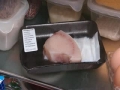
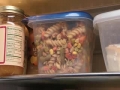
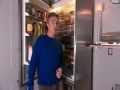
The winter of 2014 is in its early stages, and yet many parts of the country are already experiencing extreme weather conditions and power outages. In fact, a power outage can happen at any time, and it can affect the safety of your food. The U.S. Food and Drug Administration reminds you that the best way to ensure that food stays safe is to have a plan in place, and to know what food safety precautions to take if a power outage does occur.
To view Multimedia News Release, go to http://www.multivu.com/mnr/64318-u-s-fda-food-safety-during-and-after-a-power-outage
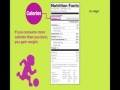
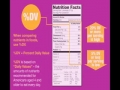
February is American Heart Month, and consumers should be aware that a high-sodium diet can increase their risk of developing high blood pressure. An estimated one in three Americans suffer from high blood pressure, which can increase the risk of developing cardiovascular disease – the leading cause of death in men and women in the United States.
To view the Multimedia News Release, go to http://www.multivu.com/mnr/65492-u-s-fda-reduce-sodium-intake-by-using-the-nutrition-facts-label
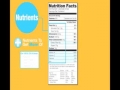
FDA’s Read the Label Youth Outreach Campaign is an exciting initiative that challenges kids (ages 9 to 13) to “get their food facts first” by using the Nutrition Facts Label to make healthy food choices. Read the Label campaign materials enable parents and caregivers to help kids use this important tool.
To view the Multimedia News Release, go to http://www.multivu.com/mnr/7106352-fda-read-the-label-youth-outreach-campaign-tweens-healthy-choices
Nearly three in four American voters (74 percent) favor increasing federal funding for cancer research, according to the results of a new national survey conducted on behalf of the American Association for Cancer Research (AACR). The survey results were released today in conjunction with the AACR’s fifth annual Cancer Progress Report. The report highlights how federally funded research can power progress against cancer and urges Congress and the administration to implement a strategy for providing annual budget increases of at least 7 percent for the National Institutes of Health (NIH), National Cancer Institute (NCI), and U.S. Food and Drug Administration (FDA) in fiscal year 2016 and thereafter.
The national survey, which was conducted by Hart Research Associates and Public Opinion Strategies, shows that five out of every six voters recognize what the AACR Cancer Progress Report 2015 details: that progress is being made against cancer.
To view the multimedia release go to:
http://www.multivu.com/players/English/7613551-aacr-cancer-research-survey/
Boston Scientific (NYSE: BSX) has received U.S. Food and Drug Administration (FDA) approval for the SYNERGY™ Bioabsorbable Polymer Drug-Eluting Stent System (BP-DES) for the treatment of coronary artery disease.
With this FDA approval, Boston Scientific will commence commercialization of the first and only BP-DES in the U.S. Notably, both the drug coating and the polymer – which modulates drug release – are fully absorbed shortly after drug elution is complete at three months.
The SYNERGY Stent provides synchronized drug and polymer absorption. It is designed to enable more rapid and complete arterial healing, and to thereby reduce the risk of complications associated with long-term polymer exposure compared to currently-used drug-eluting stents (DES) with permanent polymers.
To view the multimedia release go to:
http://www.multivu.com/players/English/7223456-boston-scientific-fda-approval-synergy/
The winter of 2015-2016 is in its early stages, and yet many parts of the country are already experiencing extreme weather conditions and power outages. In fact, a power outage can happen at any time, and it can affect the safety of your food. The U.S. Food and Drug Administration reminds you that the best way to ensure that food stays safe is to have a plan in place, and to know what food safety precautions to take if a power outage does occur.
To view the multimedia release go to:
http://www.multivu.com/players/English/7674751-fda-power-outage-food-safety/
The egg has been regarded as a symbol of new life and has been associated with springtime celebrations, such as Easter and Passover, for many centuries. But, even during festive occasions, eggs can cause food poisoning (also called foodborne illness). That’s why the U.S. Food and Drug Administration reminds consumers to follow safe food handling practices when buying, storing, preparing, and serving eggs or foods that contain them during their springtime celebrations and throughout the year.
To view the multimedia release go to:
http://www.multivu.com/players/English/7790251-fda-egg-safety/
Abbott announced today that the U.S. Food and Drug Administration has approved the company’s Absorb bioresorbable heart stent, making the first-of-its-kind medical device commercially available to treat people with coronary artery disease in the United States.
Absorb is the only fully dissolving stent approved for the treatment of coronary artery disease, which affects 15 million people in the United States and remains a leading cause of death worldwide, despite decades of therapeutic advances. While stents are traditionally made of metal, Abbott’s Absorb stent is made of a naturally dissolving material, similar to dissolving sutures. Absorb disappears completely in approximately three years, after it has done its job of keeping a clogged artery open and promoting healing of the treated artery segment. By contrast, metal stents are permanent implants that restrict vessel motion for the life of the person treated.
To view the multimedia release go to:
http://www.multivu.com/players/English/7826651-abbott-fda-approval-stent/
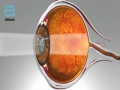
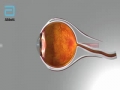
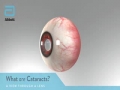
Abbott announced today that the U.S. Food and Drug Administration (FDA) has approved the Tecnis Symfony® Intraocular Lenses for the treatment of cataracts. The first in a new category of intraocular lenses (IOLs), the Tecnis Symfony lenses are the only lenses in the United States that provide a full range of continuous high-quality vision following cataract surgery, while also mitigating the effects of presbyopia by helping people focus on near objects. The FDA approval includes a version of the lens for people with astigmatism, the Tecnis Symfony Toric IOL.
Cataracts are a common condition, with almost 4 million cataract surgeries performed each year, and that number is expected to increase.1 By age 80, more than half of all Americans either have a cataract or have had cataract surgery.2 However, cataracts do not just impact seniors. In 2016 it is estimated that nearly one in four cataract surgeries will be performed on people younger than 65.1 Many people who have cataracts experience other problems with their vision, such as presbyopia and astigmatism, which the Symfony lenses also address. Presbyopia, which affects most people over age 40, means people have lost the ability to focus on objects up close and often require glasses to perform near visual tasks. Astigmatism is when the cornea is misshapen, which causes blurry or distorted vision.
To view the multimedia release go to:
http://www.multivu.com/players/English/7870151-abbott-intraocular-lenses/
Sanofi Pasteur, the vaccines division of Sanofi (EURONEXT: SAN and NYSE: SNY), announced today that its first doses of Fluzone® (Influenza Vaccine) for the 2016-2017 influenza (“flu”) season have been released by the U.S. Food and Drug Administration (FDA) for shipment. This represents the first of more than 65 million total doses of seasonal influenza vaccine manufactured by Sanofi Pasteur that will be delivered to U.S. health care providers and pharmacies beginning in July and continuing throughout the remainder of the year. Sanofi Pasteur plans to increase its supply to respond to the shifting pediatric public health needs.
Seasonal influenza activity typically occurs between October and May and peaks between December and February. However, influenza activity peaked noticeably late last season occurring in early March 2016.1 Influenza seasons are always unpredictable as new influenza strains emerge and strain activity fluctuates throughout the year, making timely vaccination even more important to help protect against the virus, especially for seniors, young children and infants six months of age and older.
To view the multimedia release go to:
http://www.multivu.com/players/English/7842051-sanofi-pasteur-influenza-vaccine/
Cochlear Limited (ASX: COH), the global leader in implantable hearing solutions, announces today it has received U.S. Food and Drug Administration (FDA) approval for its newest innovative hearing loss solution, Kanso.
The Kanso Sound Processor provides a distinct new way for cochlear implant users to hear. Unlike most hearing aids and current cochlear implant sound processors that are worn on the ear, Kanso is a small, off-the-ear hearing device that provides a more discreet hearing solution and delivers the same hearing experience as a behind-the-ear sound processor.
The name Kanso is a Japanese word for ‘simplicity,’ and it was selected in recognition of Kanso’s all-in-one design. The Kanso Sound Processor features a single on/off button with no cables so it is easy to use. It is worn on the user’s head with nothing behind the ear, adding greater comfort for those with glasses, and it can be easily hidden under or blended within a user’s hair.
To view the multimedia release go to:
http://www.multivu.com/players/English/7658352-cochlear-kanso-fda-approval/
Federally funded research continues to spur progress against cancer; however, accelerating the pace of progress will require robust, sustained, and predictable annual funding increases for the National Institutes of Health (NIH), the National Cancer Institute (NCI), and the Food and Drug Administration (FDA). Additionally, strong financial support for the National Cancer Moonshot Initiative is required, according to the sixth annual American Association for Cancer Research (AACR) Cancer Progress Report, released today.
One of the most exciting new approaches to cancer treatment is cancer immunotherapy. As detailed in the report, the utility of immunotherapy is expanding rapidly. For example, on Aug. 1, 2015, one class of immunotherapeutics, checkpoint inhibitors, was initially approved for just two types of cancer—melanoma and lung cancer. As of Sept. 1, 2016, checkpoint inhibitors have been approved for treating six types of cancer—bladder cancer, head and neck cancer, Hodgkin lymphoma, kidney cancer, lung cancer, and melanoma.
To view the multimedia release go to:
http://www.multivu.com/players/English/7911951-aacr-2016-cancer-progress-report/