Volvo Cars, the premium car maker, has revealed its distinctive approach to developing autonomous cars with the introduction of a family of four at the Detroit Motor Show.
The Hain family, from Gothenburg in Sweden, are the first people chosen to take part in a real-life autonomous drive research program using real cars, in real traffic.
“We do things differently at Volvo Cars – we always have,” said Håkan Samuelsson, President & CEO, Volvo Car Group. “Our main focus has always been on people and making their lives easier.
To view the multimedia release go to:
http://www.multivu.com/players/uk/8017451-volvo-cars-develop-autonomous-cars/
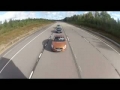
The latest test drive marks the final chapter in a three year long project which has seen the development of the next step in autonomous driving technology. Since 2009, Volvo Car Corporation has been the driving force behind the EU funded SARTRE project (Safe Road-Trains for the Environment), bringing vehicle platooning technology one step closer to becoming a reality on Europe’s roads.
To view Multimedia News Release, go to http://www.multivu.com/mnr/56600-volvo-car-corporation
Volvo Car Group reveals a number of user-friendly safety and support technologies that will be introduced in the all-new Volvo XC90 at the end of 2014.
“We are introducing the first Volvos with autonomous steering to avoid accidents and make driving more comfortable,” says Thomas Broberg, Senior Safety Advisor Volvo Car Group.
To view Multimedia News Release, go to http://www.multivu.com/mnr/61938-volvo-car-reveals-safety-support-features-XC90
Volvo Cars will play a leading role in the world’s first large-scale autonomous driving pilot project in which 100 self-driving Volvo cars will use public roads in everyday driving conditions around the Swedish city of Gothenburg.
The aim is to pinpoint the societal benefits of autonomous driving and position Sweden and Volvo Cars as leaders in the development of future mobility.
To view Multimedia News Release, go to http://www.multivu.com/mnr/64153-volvo-self-driving-cars-unique-swedish-project
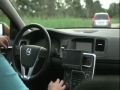
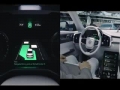
Volvo Cars presents a unique, complete system solution that makes it possible to integrate self-driving cars into real traffic – with ordinary people in the driver’s seat.
“We are entering uncharted territory in the field of autonomous driving,” says Dr Peter Mertens, Senior Vice President Research and Development of Volvo Car Group. “Taking the exciting step to a public pilot, with the ambition to enable ordinary people to sit behind the wheel in normal traffic on public roads, has never been done before.”
To view the Multimedia News Release, go to http://www.multivu.com/players/English/7443851-volvo-first-self-driving-car-system/
An early crop of advanced crash avoidance technologies includes some clear success stories when it comes to preventing crashes, insurance claim analyses by the Highway Loss Data Institute (HLDI) show.
Forward collision avoidance systems, particularly those that can brake autonomously, along with adaptive headlights, which shift direction as the driver steers, show the biggest crash reductions. Lane departure warning appears to hurt, rather than help, though it’s not clear why, and other systems, such as blind spot detection and park assist, aren’t showing clear effects on crash patterns yet.
HLDI analysts looked at how each feature affected claim frequency under a variety of insurance coverages for damage and injuries. Clear patterns were seen in claims under property damage liability (PDL) insurance, which covers damage caused by the insured vehicle to another vehicle, and collision insurance, which covers damage to the insured vehicle. Frequency is measured as the number of claims relative to the number of insured vehicle years. An insured vehicle year is one vehicle insured for one year, two vehicles for six months, etc. The model years of the vehicles included ranged from 2000 to 2011, depending on when an automaker introduced a feature. Insurance data through August 2011 were used.
Uighur Tour and Travel Service Center is run by 5 old school colleagues from different parts of Xinjiang Uighur Autonomous Region, CHINA, Offering all local people and all of us have a unique understanding of the local life, cultures, customs and history of each ethnic group in our area and along the Silk Road.
The Fourth Industrial Revolution – or “Industry 4.0” for short – is redefining the way we interact with machines. Industrial machines are becoming increasingly autonomous as they gain the ability to function independently of human input. One of the first examples of this new generation of machinery is already in use in Germany.
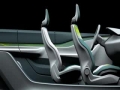
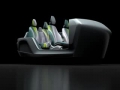
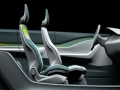
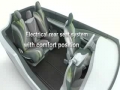
Johnson Controls, a global multi-industrial company, is constantly focusing on improving the future of car seating. Thinking ahead, Johnson Controls will present its seating demonstrator vehicle SD15 to customers and media at the 66th Frankfurt Autoshow. The SD15 features a simulated vehicle environment with a focus on first- and second-row seating while addressing the three automotive megatrends from a seating perspective: autonomous driving, lightweight, and increasing customer demands towards individualization and style for future urban mobility.
“The SD15 is based on extensive proprietary research conducted by Johnson Controls that explored what consumers expect as car seating in 2020 and beyond,” said Beda Bolzenius, president of Johnson Controls Automotive Experience. “The driver side demonstrates superior comfort and the passenger side showcases features that maximize cargo capacity and interior flexibility.”
To view the multimedia release visit:
http://www.multivu.com/players/uk/7592351-johnson-controls-new-SD15-seating-vehicle/
Johnson Controls, a global multi-industrial company, is constantly focusing on improving the future of car seating. Thinking ahead, Johnson Controls will present its seating demonstrator vehicle SD15 to customers and media at the 66th Frankfurt Autoshow. The SD15 features a simulated vehicle environment with a focus on first- and second-row seating while addressing the three automotive megatrends from a seating perspective: autonomous driving, lightweight, and increasing customer demands towards individualization and style for future urban mobility.
Furthermore, the stylish ink jet printed seat covers of the SD15 show what Johnson Controls can do in terms of individualization. The weight and space saving multi-material seats padded with highly ergonomic foam parts pave the way towards the demands of lightweight design. Many SD15 features support the megatrend of autonomous driving in the future “multi-talented” vehicle seat.
The SD15’s front row features a power driver seat mounted to a curved track, eliminating the need for separate and complex mechanisms found in conventional seat arrangements. The seat offers a control console mounted directly to the seat structure that moves conveniently with the occupant, instead of being fixed between the seats which offers wireless charging options for mobile devices.
To view the multimedia release visit:
http://www.multivu.com/players/uk/7592351-johnson-controls-new-SD15-seating-vehicle/
Volvo Cars, the premium car maker, will work together with Microsoft, the leading platform and productivity company, to jointly develop next generation automotive technologies.
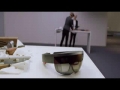
The two companies today revealed how Microsoft HoloLens, the world’s first fully untethered holographic computer, might be used in future to redefine how customers first encounter and explore a car, as well as how cars might be bought and sold in future.
Areas of future collaboration between the two companies could include autonomous driving technologies and the utilisation of data generated from connected cars to create new services.
Today’s HoloLens demonstration was conducted at Microsoft’s global headquarters in Redmond, USA, and showed how mixed reality might be used by customers to configure cars in three dimensions. With HoloLens, a powerful, wearable computer, holograms are mixed into the physical world.
To view the multimedia release go to:
http://www.multivu.com/players/English/7668751-volvo-the-virtual-showroom/
Volvo Cars is looking ahead to when its drivers can sit back and enjoy free time in their car on the daily commute.
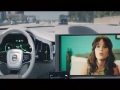
At the 2016 Consumer Electronics Show (CES) Volvo revealed that it is developing intelligent, high bandwidth, streaming capabilities with its technology partner, Ericsson, that will ensure drivers and passengers get the most out of their time travelling in an autonomous Volvo.
“We recently unveiled our design vision for fully autonomous cars with Concept 26. Now we are actively working on future solutions to deliver the best user experience in fully autonomous mode. Imagine a highway full of autonomous cars with their occupants sitting back watching their favourite TV shows in high definition. This new way of commuting will demand new technology, and a much broader bandwidth to ensure a smooth and enjoyable experience,” said Anders Tylman General Manager Volvo Monitoring & Concept Center at Volvo Car Group.
To view the multimedia release go to:
http://www.multivu.com/players/uk/7717751-volvo-ericsson-intelligent-media-streaming/