The first International Forum "Future Energy: reducing CO2 emissions" has laid the foundations for the preparation of strategic content for EXPO-2017, the starting point of a broad international dialogue on its subject, "Future Energy".
The event was a platform for the development of research projects on the subject of the exhibition and its sub-topics: reducing greenhouse gas emissions, the introduction of energy-efficient technologies and the provision of universal access to sustainable energy.
To view the Multimedia News Release, go to http://www.multivu.com/players/English/7366351-future-energy-reducing-CO2-emissions/
Global gold demand in Q2 2012 was 990.0 tonnes (t), down 7% from the 1,065.8t in Q2 2011 according to the World Gold Council’s Gold Demand Trends report. This dip in demand was partly due to the comparison with exceptional demand last year, and also reflects the challenging global economic climate. In this context, gold performed as expected, acting as both a store of value and a source of liquidity.
To view Multimedia News Release, go to http://www.multivu.com/mnr/57541-world-gold-council-s-gold-demand-trends-report-q2-2012
What started as an invention to control humidity in a New York printing plant in 1902 has forever changed the way people around the world live, work and play. July 17th marks the 110th anniversary of the invention of modern air conditioning by Dr. Willis H. Carrier, inventor and founder of Carrier, the world’s leader in high technology heating, air-conditioning and refrigeration solutions and a part of UTC Climate, Controls & Security, a unit of United Technologies Corp. (NYSE: UTX)
On July 17, 1902, Carrier, a young research engineer just a year out of Cornell University, finalized the design to stabilize the humidity in the air so the dimensions of the paper at the Sackett & Wilhelms Lithography and Printing Company in Brooklyn, N.Y., would remain constant throughout the printing process. Since then this innovation has been applied to everything from malls to manufacturing facilities, buses to businesses and houses to hospitals – all looking to establish a comfortable environment.
To view Multimedia News Release, go to http://www.multivu.com/mnr/54996-carrier-modern-air-conditioning-110-years-of-making-the-world-a-cool-place
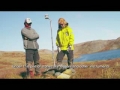
What impact would an ice sheet have on a Swedish final repository for spent nuclear fuel? And how does a final repository affect the surroundings if the ground is constantly frozen? The answers to these questions can be found in Greenland.
The nuclear fuel repository has to function and be safe for very long periods of time. SKB’s safety analyses investigate what will happen to the repository during as long a period of time as one million years. That’s the equivalent of as much as eight ice age cycles. By examining existing ice sheets, like the one in Greenland, climatologists can learn enough to be able to model what could occur in the far future.
To view Multimedia News Release, go to http://www.multivu.com/mnr/58701-swedish-nuclear-fuel-waste-management-SKB
Shell today announced that it will go ahead with the first carbon capture and storage (CCS) project for an oil sands operation in Canada. The Quest project will be built on behalf of the Athabasca Oil Sands Project joint venture owners (Shell, Chevron and Marathon Oil) and with support from the Governments of Canada and Alberta.
CCS is critical to meeting the huge projected increase in global energy demand while reducing carbon dioxide (CO2) emissions, explained Peter Voser, Chief Executive Officer of Royal Dutch Shell plc. “If you want to achieve climate change goals, CCS has to be part of the solution. We are helping to advance CCS technology on a number of fronts around the world, but Quest will be our flagship project.”
To view Multimedia News Release, go to http://multivu.prnewswire.com/mnr/prne/shell-first-oil-sands-css-project/56586/
www.cascadesierrasolutions.org
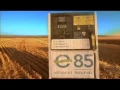
The Northwest produces clean, renewable ethanol that helps reduce pollution and combat climate change. By reducing petroleum dependence, ethanol helps bring true homeland security. This PSA was produced by Fluid Images, Cascade Sierra Solutions and Lane Regional Air Protection Agency. Major funding provided by a US Department of Energy award granted to promote retail availablity of ethanol.
What impact would an ice sheet have on a Swedish final repository for spent nuclear fuel? And how does a final repository affect the surroundings if the ground is constantly frozen? The answers to these questions can be found in Greenland.
SKB is also studying what happens at the ground surface in a permafrost landscape. How does the water at the surface flow in a landscape where the ground is constantly frozen? And how does the biosphere work, where all life is? These are questions for the GRASP Project: Greenland Analogue Surface Project.
To view Multimedia News Release, go to http://www.multivu.com/mnr/58701-swedish-nuclear-fuel-waste-management-SKB
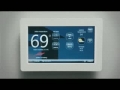
The Lennox icomfort™ Wi-Fi Thermostat allows homeowners to achieve customized comfort and maximum energy savings – anytime, anywhere.
Thanks to the icomfort Wi-Fi Thermostat’s Cloud connectivity, a homeowner can adjust the temperature from anywhere with a smartphone or other Web-enabled device. One touch on the thermostat, app, or website puts the icomfort Wi-Fi into energy — and money — saving mode, making it an ideal solution for homeowners seeking convenience and energy savings.
To view Multimedia News Release, go to http://www.multivu.com/mnr/56239-lennox-unveils-innovative-icomfort-wi-fi-thermostat
A smoke alarm’s low battery chirp is the number one home fire safety complaint among American homeowners who participated in a recent survey conducted by Kelton on behalf of Kidde, the leading manufacturer of residential fire safety products. In fact, 61 percent of respondents have left their alarm without a working battery. Kidde’s new Worry-Free line of smoke alarms with a 10-year sealed-in lithium battery aims to solve common consumer complaints and pressing fire industry concerns. Kidde is a business of UTC Climate, Controls, & Security, a unit of United Technologies Corp. (NYSE: UTX)
To view Multimedia News Release, go to http://www.multivu.com/mnr/59180-kidde-worry-free-smoke-alarms-sealed-in-lithium-battery
Kidde, the world’s largest manufacturer of fire safety products, has expanded its Worry-Free product line to include the first and only UL-listed carbon monoxide (CO) alarms proven to provide a decade of protection – up to twice the lifespan in other available alarms. Like the Kidde Worry-Free smoke alarms, the CO alarms contain a sealed-in lithium battery that powers the alarm and eliminates homeowners’ top fire safety complaint: a low-battery chirp. Kidde is a part of UTC Climate, Controls, & Security, a unit of United Technologies Corp. (NYSE: UTX).
To view Multimedia News Release, go to http://www.multivu.com/mnr/60977-kidde-worry-free-first-and-only-ul-listed-carbon-monoxide-co-alarms
From the changing nature of work to evolving consumer expectations, executives are facing new challenges as they seek to ensure success in a business climate marked by constant change. CEB (NYSE: CEB) the leading member-based advisory company, today released Top Insights for the World’s Leading Executives to identify the shifts driving change and help organizations embrace the challenges they pose in order to realize meaningful growth in the years ahead.
To view the Multimedia News Release, go to http://www.multivu.com/players/English/7291531-ceb-2014-top-insights/
For negotiators at the Paris climate conference (COP21) to successfully advance global efforts to reduce carbon emissions, nations must embrace a prominent role for nuclear energy.
The Obama administration highlighted the crucial role of nuclear energy when it convened a White House Summit on Nuclear Energy earlier this month. “As America leads the global transition to a low-carbon economy, the continued development of new and advanced nuclear technologies along with support for currently operating nuclear power plants is an important component of our clean energy strategy,” a White House fact sheet developed for the summit states. Many environmentalists are also giving nuclear energy a second look, as they seek practical solutions to constrain carbon emissions.
Nuclear energy facilities provide 63 percent of America’s zero-carbon electricity. Globally, nuclear power plants provide one-third of all zero-carbon electricity. One of nuclear energy’s major advantages relative to other low-carbon energy sources is its unique ability to produce large-scale electricity around-the-clock in extreme weather conditions. Nuclear energy facilities don’t rely on the wind blowing, the sun shining, or just-in-time deliveries of fuel by truck, barge, rail or pipeline. In 2014, the U.S. nuclear energy industry’s average capacity factor—a common measure of efficiency and reliability—was 92 percent.
To view the multimedia release go to:
http://www.multivu.com/players/English/7694251-nuclear-energy-cop21-climate-goals/