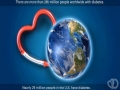
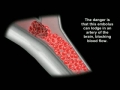
New data revealed that nearly 100 percent (99%) of 200 U.S. primary care physicians surveyed agree that heart disease and stroke are the number one cause of death and disability among type 2 diabetes patients; however, almost 40 percent (36%) of these physicians underestimate the number of patients who die from cardiovascular disease. Furthermore, while people with diabetes are two to four times more likely to have heart disease than people without diabetes, the survey, conducted by Harris Interactive and supported by Merck, found only one out of five (21%) patients (n=664) listed heart attack or heart failure as their biggest worry regarding diabetes complications, and even fewer patients (7%) listed stroke.
To view Multimedia News Release, go to http://multivu.prnewswire.com/mnr/merck/50638/
According to a new report, How Can We Avoid a Stroke Crisis in the Asia-Pacific Region?, urgent coordinated action is needed to avoid millions of preventable strokes, which leave many patients who have atrial fibrillation (AF) both mentally and physically disabled, or dead, every year.
The report, launched today during the 18th Asian Pacific Congress of Cardiology (APCC) by Action for Stroke Prevention, a group of health experts from across the globe, proposes urgent measures to prevent stroke in Asia-Pacific patients with AF, the most common, sustained abnormal heart rhythm and a major cause of stroke. The report’s recommendations are endorsed by 32 leading Asia-Pacific and other global medical societies and patient organizations, reinforcing and recognizing the need for a call to action.
To view Multimedia News Release, go to http://multivu.prnewswire.com/mnr/prne/strikeoutstroke/48909/
Over 10,000 patients, caregivers, healthcare professionals, policy makers and the general public from 136 countries have signed the world's only Global Atrial Fibrillation Patient Charter calling for government action to help prevent millions of people from dying or becoming disabled by a stroke caused by Atrial Fibrillation (AF).
People can learn about AF and stroke, and read and sign the Charter, which is available in 22 languages, on the Campaign website,www.signagainststroke.com.
To view Multimedia News Release, go to http://www.multivu.com/players/English/57497-sign-against-stroke/
Do you know how to recognize a stroke? Would you know what to do if someone — or you — had one? Many people don't, and 795,000 people in the United States will have a stroke this year.
In a recent American Heart Association/American Stroke Association survey, only 41 percent of people who care for family with significant risk factors for a first-time stroke could name at least three stroke warning signs.
As part of World Stroke Day on Oct. 29, and National Family Caregivers Month in November, the American Stroke Association is urging Americans to learn the stroke warning signs and to act fast when a stroke occurs.
To view the Multimedia News Release, go to http://www.multivu.com/mnr/62321-world-stroke-day-survey-prepare-for-stroke-emergency
The Heart Rhythm Society (HRS), through its efforts during Atrial Fibrillation Awareness Month in September and throughout the year, is working to raise awareness of the increased prevalence of the disease and the associated risk of stroke in patients living with atrial fibrillation (AFib). Today, HRS releases a new public service announcement (PSA) as part of its ongoing work to educate Americans about AFib, the most common heart arrhythmia, and how it increases one’s risk of stroke fivefold. The PSA can be viewed by clicking here.
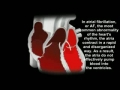
AFib affects more than three million Americans and it is estimated that 12 to 16 million Americans will have AFib by 2050. AFib occurs when the upper chambers of the heart (the atria) fibrillate, or “quiver,” which causes a rapid, irregular heart rhythm. The normal heart rate for an adult is between 60 and 100 beats every minute. When the heart is experiencing AFib, the atria can beat over 300 times every minute.
To view the multimedia release go to:
http://www.multivu.com/players/English/7312151-heart-rhythm-society-afib-stroke-psa/
Children’s Medical Center Dallas (Children’s) http://childrens.com is launching a critical stroke initiative to diagnose and treat strokes in children. Pediatric strokes is a little-known condition that occurs as often as leukemia and brain tumors but often is not recognized by parents or physicians, despite the serious short- and long-term health consequences. As part of this effort, Children’s will be one of four research sites in North America participating in this groundbreaking research.
To view Multimedia News Release, go to http://multivu.prnewswire.com/mnr/childrens/48624/
After an unexpected diagnosis of atrial fibrillation (AFib), a type of irregular heart beat they had never heard of before, daytime TV star Susan Lucci and her husband Helmut Huber learned he is one of the estimated 2.3 million Americans living with the condition, which can increase the risk of stroke nearly five-fold. The couple, who have spent more than a decade working with their doctor to help minimize Helmut’s stroke risk, today announced they have partnered with Boehringer Ingelheim Pharmaceuticals, Inc., National Stroke Association and StopAfib.org to launch a new national education program to improve awareness of AFib and its increased risk of stroke.
To view Multimedia News Release, go to http://multivu.prnewswire.com/mnr/boehringer-ingelheim/46196/
Susan Lucci is no stranger to the spotlight and now she is talking about a serious issue that’s close to her heart – atrial fibrillation (AFib) and its connection to stroke. In a national public service announcement (PSA) recently launched, Lucci and her husband, Helmut Huber, who lives with AFib, are encouraging the more than 2.3 million Americans living with the condition, along with their loved ones, to join them in taking the Facing AFib Pledge to do all they can to reduce the risk of AFib-related stroke.
To view Multimedia News Release, go to http://www.multivu.com/players/English/49621-facing-afib/
Urgent coordinated action from national governments, medical societies and patient organizations is needed to avoid a public health crisis resulting from the tide of preventable strokes that leave many people with atrial fibrillation (AF) mentally and physically disabled or dead, every year. How Can We Avoid a Stroke Crisis in Latin America?, a report from Action for Stroke Prevention – a group of health experts from around the world - reveals the huge economic, social and personal burden of AF-related strokes across the region. Launched today at the International Society for Pharmacoeconomics and Outcomes Research (ISPOR) 3rd Latin America Conference, the report proposes measures to tackle stroke in patients with AF, the most common, sustained abnormal heart rhythm and a major cause of stroke.
To view Multimedia News Release, go to http://multivu.prnewswire.com/mnr/prne/strikeoutstroke/50549/
Music icon Barry Manilow today revealed his long struggle to manage a serious heart disease called atrial fibrillation (AFib). He has joined with Sanofi US to kick-off Get Back in Rhythm™, a national education campaign to raise awareness about AFib, and to encourage people to learn more about all the risks of AFib and the importance of keeping the heart in rhythm.
Today, approximately 2.5 million Americans have AFib and that number is expected to grow to 12 million by 2050. A serious heart disease that causes the heart to race and beat out of rhythm, AFib can lead to permanent heart damage, heart attack, heart failure, stroke and death.
To view Multimedia News Release, go to http://www.multivu.com/mnr/51813-get-back-in-rhythm-barry-manilow-afib-awareness
Ahead of World Stroke Day 2012 (October 29), European Policy Makers have joined over 90 Medical and Patient Organisations, and more than 100,000 people, in supporting the Global Atrial Fibrillation (AF) Patient Charter and calling for National Governments and the World Health Organisation to act to make the prevention of AF-related strokes a priority. The Charter outlines ways to improve the diagnosis and management of AF which, if implemented, could stop thousands of preventable strokes from occurring each and every year.
To view Multimedia News Release, go to http://www.multivu.com/players/English/57497-sign-against-stroke/
Every 40 seconds a stroke occurs in the United States, according to the American Heart Association/American Stroke Association. To raise awareness about F.A.S.T. — an acronym to recognize and respond to the sudden warning signs of stroke, the American Heart Association/American Stroke Association and Ad Council are unveiling a new, national multimedia public service advertisement (PSA) campaign. F.A.S.T. is designed to help bystanders spot a stroke fast because the quicker a stroke victim receives medical attention, the greater his or her chances of survival and a better recovery. To view Multimedia News Release, go to http://www.multivu.com/mnr/58828-ad-council-american-stroke-association-stroke-awareness-f-a-s-t