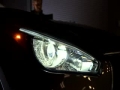
Just over half of 2018 model vehicles evaluated by the Insurance Institute for Highway Safety are available with headlights that do an adequate job of lighting the road at night and limiting glare for oncoming drivers, but most good-rated headlights are optional or bundled with other features that can raise the price of the vehicle.
Since IIHS released its first headlight ratings for passenger vehicles in 2016, most manufacturers have focused on improving this key safety component. That year, only 2 of 95 headlight systems on 2016-model vehicles evaluated earned a good rating.
For the 2018 model year, the best-available headlights on 32 of 165 models evaluated earn the highest rating of good, and the best-available headlights on 58 models earn the second-highest rating of acceptable. Thirty-two models have only marginal-rated headlights, while poor-rated headlights are the only ones available for 43 models.
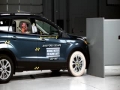
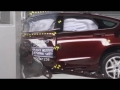
In a new round of evaluations, 5 of 7 small SUVs earn good ratings from the Insurance Institute for Highway Safety for occupant protection in a passenger-side small overlap front crash.
The ratings bring to 16 the number of small SUVs the Institute has evaluated in the passenger-side small overlap front test, which was introduced in 2017 to encourage manufacturers to offer the same level of protection for front-seat passengers as drivers in this type of crash.
The BMW X1; Chevrolet Equinox and its twin, the GMC Terrain; Jeep Compass and Mitsubishi Outlander earn good ratings in the passenger-side small overlap front test. The Mitsubishi Outlander Sport earns a marginal rating, and the Ford Escape earns poor. For the 2018 model year, the Equinox shed weight to join the small SUV size class. Earlier models were classified as midsize.
None of the newly rated 2018 models earns better than acceptable marks for structure. (The Honda CR-V and Mazda CX-5 are the only small SUVs evaluated so far to earn good ratings for structure in the passenger-side small overlap front test.) The Outlander Sport is marginal, and the Escape is rated poor. Both the Outlander Sport and Escape allowed too much intrusion into the occupant compartment on the right side.
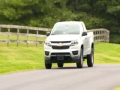
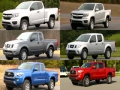
Four out of eight small pickup trucks evaluated by the Insurance Institute for Highway Safety earn good ratings for occupant protection in all five IIHS crashworthiness evaluations, but the lack of an automatic emergency braking system and poor-rated headlights means these pickups fall short of qualifying for either of the Institute’s safety awards.
IIHS engineers evaluated two body styles of each pickup — crew cab and extended cab. Crew cabs have four full doors and two full rows of seating. Extended cabs have two full front doors, two smaller rear doors and compact second-row seats. The Institute tests the two most popular versions of pickups because their performance can vary by body style. The ratings in this round of evaluations apply to 2017 models.
The Toyota Prius v is the only midsize car out of 31 evaluated to earn a good rating in the Insurance Institute for Highway Safety’s first-ever headlight ratings.
The best available headlights on 11 cars earn an acceptable rating, while nine only reach a marginal rating. Ten of the vehicles can’t be purchased with anything other than poor-rated headlights.
A vehicle’s price tag is no guarantee of decent headlights. Many of the poor-rated headlights belong to luxury vehicles.
The ability to see the road ahead, along with any pedestrians, bicyclists or obstacles, is an obvious essential for drivers. However, government standards for headlights, based on laboratory tests, allow huge variation in the amount of illumination that headlights provide in actual on-road driving. With about half of traffic deaths occurring either in the dark or in dawn or dusk conditions, improved headlights have the potential to bring about substantial reductions in fatalities.
The Chevrolet Volt and Nissan Leaf earn the highest safety ratings from the Insurance Institute for Highway Safety in the first-ever U.S. crash test evaluations of plug-in electric cars. The milestone demonstrates that automakers are using the same safety engineering in new electric cars as they do in gasoline-powered vehicles.
The Volt and Leaf earn the top rating of good for front, side, rear, and rollover crash protection. With standard electronic stability control, they qualify as winners of TOP SAFETY PICK, the Institute’s award for state-of-the-art crash protection. The ratings help consumers pick vehicles that offer a higher level of protection than federal safety standards require.
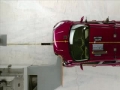
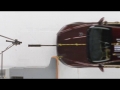
A group of moderately priced midsize cars outperformed most of their luxury counterparts in a challenging new frontal crash test conducted by the Insurance Institute for Highway Safety (IIHS) on 2013 models. Of the 18 midsize family cars evaluated in the small overlap test, two earn the top rating of good, 11 earn acceptable, three earn marginal, and two are poor.
In contrast, just 3 of 11 midsize luxury and near-luxury cars evaluated in the inaugural round of small overlap tests earned good or acceptable ratings. Midsize moderately priced cars are the second group to be tested. The best performers in this group are the Honda Accord 4-door and Suzuki Kizashi. Both earn a good rating.
Studies show that more than two-thirds of aesthetically-oriented consumers are bothered by submental fullness, or “double chin.” And with social media profile images becoming more important than ever, there is interest in looking one’s best.
Submental fullness due to fat beneath the chin can impact a broad range of both men and women and because the condition can be genetic and resistant to diet and exercise. But there’s KYBELLA®, the first and only FDA-approved injectable treatment that is available by prescription only, that has been proven to improve the appearance of moderate to severe fat beneath the chin by physically destroying fat cells in the treatment area. In two pivotal clinical studies for KYBELLA®, reductions in submental fat volume were observed more frequently in the KYBELLA® treated group of 514 patients compared to the placebo group (508 patients) as measured by both clinician and patient ratings. In addition, visual and emotional impacts of submental fat (happy, bothered, self-conscious, embarrassed, looking older or overweight) were evaluated using a 6-question survey and 79% of 1 and 2-grade composite responders reported satisfaction after 12 weeks post final treatment compared with 33.6% of patients who received placebo.
To view the multimedia release go to:
http://www.multivu.com/players/English/7962051-kybella-injectable-double-chin-treatment-campaign/
http://www.bestwasheranddryer-reviews.com Visiting this website you will find helpful consumer reviews and feedback about the best and cheapest washers and dryers on the market! Get more information now!
Less than a year into a new Insurance Institute for Highway Safety ratings program for front crash prevention, auto manufacturers are making strides in adopting the most beneficial systems with automatic braking capabilities and are offering the features on a wider variety of models. Twenty-one of 24 cars and SUVs, all 2014 models unless noted, earn an advanced or higher rating in the latest round of IIHS evaluations.
The number of vehicles earning either of two awards from the Insurance Institute for Highway Safety has jumped to 71 from 39 this time last year, giving consumers more choices for optimum protection in crashes. The number of winners in the top tier — TOP SAFETY PICK+ — has increased by 11 for 2015, despite a tougher standard for front crash prevention.
While the bar has been raised for TOP SAFETY PICK+, the criteria for TOP SAFETY PICK are unchanged from 2014: a good or acceptable rating in the challenging small overlap front test and a good rating in each of the Institute's four other crashworthiness evaluations — moderate overlap front, side, roof strength and head restraints. The 2015 TOP SAFETY PICK+ designation is awarded to vehicles that meet those criteria and also have an available front crash prevention system that earns an advanced or superior rating.
Nearly five dozen 2019 models meet stricter criteria to qualify for a 2019 TOP SAFETY PICK+ or TOP SAFETY PICK award from the Insurance Institute for Highway Safety. The 30 first-tier “plus” award winners earn the highest rating for passenger-side protection in a small overlap front crash and have good-rated available headlights, while the 27 winners of the second-tier award qualify with an acceptable or higher rating in the newest IIHS crash test and the nighttime headlight evaluation.
All 57 vehicles in this elite group earn good ratings in the Institute’s five other crashworthiness evaluations and have an available automatic emergency braking system that rates advanced or superior for front crash prevention.
IIHS now requires a good rating in the passenger-side small overlap front test to earn a 2019 TOP SAFETY PICK+ versus an acceptable or good rating for the 2018 award. An acceptable or good rating in the passenger-side test is a new criterion to earn a 2019 TOP SAFETY PICK.
This marks the sixth time that IIHS has raised the bar to earn the TOP SAFETY PICK+ award since introducing it in the 2013 model year to recognize vehicles that offer a superior level of safety. The TOP SAFETY PICK accolade launched in the 2006 model year to help consumers identify vehicles with the highest ratings. Over the years, IIHS has added to and strengthened criteria for both awards to encourage manufacturers to speed up safety advances.
Consumers who choose a 2017 TOP SAFETY PICK+ award winner shouldn’t have trouble seeing the road on nighttime drives. Good or acceptable ratings in the Insurance Institute for Highway Safety’s new headlight evaluations set the latest crop of qualifiers apart. Thirty-eight models earn the “plus” accolade, and 44 earn TOP SAFETY PICK.
IIHS toughened the criteria for TOP SAFETY PICK+ to reflect new headlight evaluations launched in 2016. The recognition program is meant to encourage manufacturers to offer state-of-the-art protection for people in crashes, along with features that help drivers avoid crashes in the first place. In addition to good or acceptable headlights, the latter includes automatic braking technology, which has been part of the criteria since 2015.
For both awards, models must earn good ratings in the Institute’s small overlap front, moderate overlap front, side, roof strength and head restraint tests, as well as an advanced or superior rating for front crash prevention with standard or optional autobrake. Headlights are factored in only for the top award.