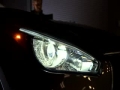
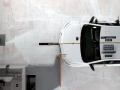
Consumers who choose a 2017 TOP SAFETY PICK+ award winner shouldn’t have trouble seeing the road on nighttime drives. Good or acceptable ratings in the Insurance Institute for Highway Safety’s new headlight evaluations set the latest crop of qualifiers apart. Thirty-eight models earn the “plus” accolade, and 44 earn TOP SAFETY PICK.
IIHS toughened the criteria for TOP SAFETY PICK+ to reflect new headlight evaluations launched in 2016. The recognition program is meant to encourage manufacturers to offer state-of-the-art protection for people in crashes, along with features that help drivers avoid crashes in the first place. In addition to good or acceptable headlights, the latter includes automatic braking technology, which has been part of the criteria since 2015.
For both awards, models must earn good ratings in the Institute’s small overlap front, moderate overlap front, side, roof strength and head restraint tests, as well as an advanced or superior rating for front crash prevention with standard or optional autobrake. Headlights are factored in only for the top award.
Auto and tech companies are coming together to put driverless cars on the road. Data is what's powering the race. From design and manufacturing to safety and services, data is informing every step of the process towards fully autonomous vehicles. As transformative as they are, self-driving, connected cars are just one component in a much-larger data-collection network soon to be on the world's roads and highways.
What's the future of transportation look like with self-driving and human-driving cars side-by-side? How will the data--some estimates go as high as 1GB per second--from driverless cars be put to use?
To view the multimedia release go to:
http://www.multivu.com/players/English/7889731-bloomberg-western-digital-bgovdata/
Better hospital supply chain management leads to better quality of care and supports patient safety, according to a new Cardinal Health survey of hospital staff and decision makers. Despite respondents rating their supply chain processes as “good,” one in four hospital staff have seen or heard of expired product being used on a patient, and 18 percent have seen or heard of a patient being harmed due to a lack of necessary supplies.
New midsize SUV ratings from the Insurance Institute for Highway Safety show that headlights are improving when it comes to visibility, but many still need to do a better job of lighting the road ahead while limiting bothersome glare.
The 2017 Hyundai Santa Fe and the 2017 Volvo XC60 are the only models available with good-rated headlights among the 19 midsize SUVs and 18 midsize luxury SUVs evaluated in this new round of tests. Twelve SUVs are available with headlights rated acceptable, while 23 aren’t available with anything other than marginal- or poor-rated headlights.
Volvo Cars, the premium car maker best known for its leadership in safety, has teamed up with three-time Pulitzer Prize-winning photographer and artist Barbara Davidson for a world-first - using the on-board safety cameras of the new Volvo XC60 to create a special collection of photographs.
This is the first time ever that a car is used as a camera by a photographer. Davidson’s collection of around 30 photographs, taken through the lenses of the XC60’s on-board safety cameras, captures life on the streets of the Danish capital Copenhagen from a completely fresh perspective.
To view the multimedia release go to:
https://www.multivu.com/players/uk/8129151-volvo-cars-exhibition-life-city-xc60/
Adults have gotten the message that it’s safer for kids to ride in the back seat properly restrained, but when it comes to their own safety, there is a common misperception that buckling up is optional. Among adults who admit to not always using safety belts in the back seat, 4 out of 5 surveyed by the Insurance Institute for Highway Safety say short trips or traveling by taxi or ride-hailing service are times they don’t bother to use the belt.
The new survey reveals that many rear-seat passengers don’t think belts are necessary because they perceive the back seat to be safer than the front. This shows a clear misunderstanding about why belts are important, no matter where a person sits in a vehicle.
Before the majority of Americans got into the habit of buckling up, the back seat was the safest place to sit, and the center rear seat was the safest place of all in 1960-70s’ era vehicles. In recent decades, high levels of restraint use, the advent of belt pretensioners, load limiters and airbags, plus crashworthy vehicle designs have narrowed the safety advantages of riding in the rear seat for teens and adults.
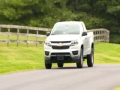
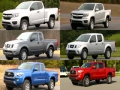
Four out of eight small pickup trucks evaluated by the Insurance Institute for Highway Safety earn good ratings for occupant protection in all five IIHS crashworthiness evaluations, but the lack of an automatic emergency braking system and poor-rated headlights means these pickups fall short of qualifying for either of the Institute’s safety awards.
IIHS engineers evaluated two body styles of each pickup — crew cab and extended cab. Crew cabs have four full doors and two full rows of seating. Extended cabs have two full front doors, two smaller rear doors and compact second-row seats. The Institute tests the two most popular versions of pickups because their performance can vary by body style. The ratings in this round of evaluations apply to 2017 models.
Not all heroes wear capes, and when it comes to fire and carbon monoxide safety, anyone can be a superhero. In honor of Fire Prevention Month this October, First Alert, the most trusted brand in home safety*,is encouraging everyone to be super prepared when it comes to whole home safety. First Alert has been helping protect homes and families since 1958.
“Three of every five home fire deaths result from fires in homes without smoke alarms or no working smoke alarms**,” said Tarsila Wey, director of marketing for First Alert, a leader in residential fire and carbon monoxide (CO) detection devices. “Many of these tragedies could be prevented with proper placement and maintenance of working smoke alarms, as well as prior emergency and escape planning. Through a highly educational and fun campaign with our Super Prepared Family, we aim to help people understand the importance of practicing fire safety and involving their whole families when discussing the topic.”
To view the multimedia release go to:
https://www.multivu.com/players/English/8192351-first-alert-fire-prevention-super-prepared-family/
A new crash test program from the Insurance Institute for Highway Safety aims to ensure that manufacturers pay attention to the safety of front passengers as well as drivers.
The test was developed after it became clear that some manufacturers were giving short shrift to the right side of the vehicle when it comes to small overlap front crash protection. A good or acceptable passenger-side rating will be required to qualify for the Institute’s 2018 TOP SAFETY PICK+ award.
The first test group in the passenger-side small overlap front test program did better overall than vehicles IIHS previously evaluated for research. Ten out of 13 midsize cars tested earn a good rating, while one is acceptable and two earn a marginal rating.
In contrast with a group of 2014-16 model small SUVs tested for research, none of the 2017-18 midsize cars had a poor or marginal structural rating. Instead, the biggest problem in the new group was inconsistent airbag protection in five cars, which would put passengers’ heads at risk.
Successful winter travel is all about successful navigation of winter weather and the holiday crowds. Preparedness and safety are key. Whether it’s a two-hour drive or a two-hour flight, traveling can be one of the most stressful parts of the holiday season. And while there are some things you can’t control, there are ways to make the most of your holiday travels this year.
On Thursday, November 9th, travel pro, Amy Goodman, will be available to discuss how she beats the winter travel blues. She will provide tips on the latest tricks, tools and trends to arm yourself against the mania and keep the holiday cheer alive.
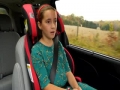
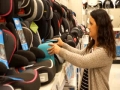
Thirteen out of 16 new booster seats for 2017 earn the Insurance Institute for Highway Safety's highest rating of BEST BET, bringing the total number of boosters on the market with that designation to 118.
The BEST BET rating means a booster provides good safety belt fit for typical 4 to 8 year-olds in almost any car, minivan or SUV. Boosters that are rated GOOD BETs provide acceptable belt fit in almost any vehicle, while those rated Check Fit could work for some children in some vehicles. Seats designated "Not Recommended" don’t provide good belt fit and should be avoided.
Just 15 vehicles qualify for the TOP SAFETY PICK+ award from IIHS after the requirements were strengthened to include good-rated headlights and good or acceptable passenger-side protection in small overlap front crashes.
Another 47 vehicles earn the TOP SAFETY PICK award, which now requires acceptable or good headlights. In contrast, headlights weren’t factored in for 2017 TOP SAFETY PICK, and an acceptable headlight rating was enough to bump a 2017 award winner into "plus" territory.
The inclusion of a passenger-side crash test is a first for any IIHS award. The Institute developed the passenger-side small overlap front crash test after it became clear that some manufacturers weren't paying sufficient attention to the passenger side as they made improvements to achieve better performance in the driver-side small overlap front test.