Soy consumption is up 14 percent since 2011,26 yet confusion lingers over soy’s role in everything from human health to food production. To clear up misperceptions, the United Soybean Board (USB) busts five common soy myths with science-backed facts on SoyConnection.com/soy-wisdom.
1) Eating soy does not increase breast cancer risk.
Clinical studies show soy isoflavone exposure does not adversely affect breast tissue as assessed by markers of breast cancer risk, such as breast cell proliferation.1–7 The American Institute for Cancer Research and the American Cancer Society say that women who have been diagnosed with breast cancer can safely consume soyfoods. In fact, the World Cancer Research Fund International has identified a link between soy consumption and an improved survival of breast cancer patients.8-9
“Not only does evidence indicate soyfoods may benefit women with breast cancer, but consuming soy when young helps prevent the onset of this disease later in life27-30,” stated Mark Messina, Ph.D., who has dedicated the past 30 years to understanding the health effects of soyfoods.
To view the multimedia release go to:
http://www.multivu.com/players/English/7877951-united-soybean-board-top-soy-myths/
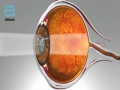
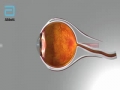
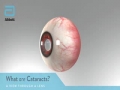
Abbott announced today that the U.S. Food and Drug Administration (FDA) has approved the Tecnis Symfony® Intraocular Lenses for the treatment of cataracts. The first in a new category of intraocular lenses (IOLs), the Tecnis Symfony lenses are the only lenses in the United States that provide a full range of continuous high-quality vision following cataract surgery, while also mitigating the effects of presbyopia by helping people focus on near objects. The FDA approval includes a version of the lens for people with astigmatism, the Tecnis Symfony Toric IOL.
Cataracts are a common condition, with almost 4 million cataract surgeries performed each year, and that number is expected to increase.1 By age 80, more than half of all Americans either have a cataract or have had cataract surgery.2 However, cataracts do not just impact seniors. In 2016 it is estimated that nearly one in four cataract surgeries will be performed on people younger than 65.1 Many people who have cataracts experience other problems with their vision, such as presbyopia and astigmatism, which the Symfony lenses also address. Presbyopia, which affects most people over age 40, means people have lost the ability to focus on objects up close and often require glasses to perform near visual tasks. Astigmatism is when the cornea is misshapen, which causes blurry or distorted vision.
To view the multimedia release go to:
http://www.multivu.com/players/English/7870151-abbott-intraocular-lenses/
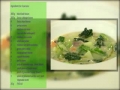
The website www.MyPerfectDish.eu aims to help people with Parkinson’s, their relatives and caregivers in taking care of their nutritional requirements in order to help them enjoy tasty food that meets their dietary needs.
The website is endorsed by the European Parkinson’s Disease Association (EPDA) and sponsored by Zambon, and has been designed as an easy-to-use scientific information tool so people living with Parkinson’s can be confident that what they are reading is reliable.
“As the only European Parkinson’s umbrella organisation, the EPDA is very proud to endorse this project, which is based on solid scientific and medical grounds,” explains EPDA president Knut-Johan Onarheim. “A balanced and varied diet is important for everyone but it is even more important for people living with Parkinson’s disease because the right food intake can improve their quality of life as well as the effects of therapeutic treatments”.
“Zambon is very proud of having supported this project, which will help people with Parkinson’s and all those involved in the management of the disease. We are strongly committed to drive research and develop solutions to help patients in all their needs“. states Elena Zambon, President of Zambon.
To view the multimedia release go to:
http://www.multivu.com/players/uk/7864251-parkinsons-diet-online-resource/
Madison Taliaferro spent weeks in the hospital in 2012. After a decade of suffering from cystic fibrosis, she underwent a double lung transplant. She powered through the difficult surgery and the recovery that followed –long days of physical therapy and rehabilitation. Her parents were there. Her best friend visited from Kansas. Grandparents rotated shifts so she was never alone. But one request still lingered.
“I just wanted to see my dogs,” she remembers.
Having suffered from the effects of chronic illness for the decade prior, Madison was no stranger to long days at home, isolated from the school germs that could turn her illness into a critical condition with a single sneeze. When her friends couldn’t visit, her dogs were there. But at the hospital, they weren’t.
To view the multimedia release go to:
http://www.multivu.com/players/English/7835951-purina-family-pet-center-st-louis-childrens/
Over 80% of Americans want to spend their last days at home, with friends and family. Yet, despite these desires, 75% of Americans will spend their last days in a hospital room. Many people will spend hours each day getting painful and often useless treatments and tests, and be asked to take dozens of debilitating drugs. For many, the cure is worse than the disease. This often has negative and lasting effects on family and friends who are often left with feelings of guilt and regret for years to come.
Hospice Support Fund is a 501(c)(3) non-profit organization dedicated to promoting end of life care at home rather than in a hospital so patients can spend their last days in dignity and peace, pain-free in familiar, comfortable surroundings with friends and family.
To view the multimedia release go to:
http://www.multivu.com/players/English/7785451-hospice-support-fund-end-of-life-care-psa/
Announced today by VICHY Laboratoires, the VICHY EXPOSOME GRANT will promote and encourage research activity on the skin exposome. One research grant of 15 000 € will be awarded annually to a research project proposal in the field of exposome and skin.
What is exposome?
The human body is subjected to and responds to complex exposures throughout the lifespan, including exposures from the environment, diet, lifestyle. For this highly complex interaction, the term exposome was recently coined by Dr. Christopher Wild at the World Health Organization‘s International Agency for Research on Cancer.
The exposome analysis, therefore, complements the human genome by providing a comprehensive description of individuals’ lifelong environmental exposures. Exposome research aims to look at the holistic view of the human body’s exposures, how the body responds to those exposures, and their combined effects.
To view the multimedia release go to:
http://www.multivu.com/players/uk/7751451-vichy-announces-exposome-grant/
Announced today by VICHY Laboratoires, the VICHY EXPOSOME GRANT will promote and encourage research activity on the skin exposome. One research grant of 15 000 € will be awarded annually to a research project proposal in the field of exposome and skin.
What is exposome?
The human body is subjected to and responds to complex exposures throughout the lifespan, including exposures from the environment, diet, lifestyle. For this highly complex interaction, the term exposome was recently coined by Dr. Christopher Wild at the World Health Organization‘s International Agency for Research on Cancer.
The exposome analysis, therefore, complements the human genome by providing a comprehensive description of individuals’ lifelong environmental exposures. Exposome research aims to look at the holistic view of the human body’s exposures, how the body responds to those exposures, and their combined effects.
To view the multimedia release go to:
http://www.multivu.com/players/uk/7751451-vichy-announces-exposome-grant/
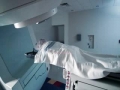
St. Jude Children’s Research Hospital® officials and guests today marked the opening of the St. Jude Red Frog Events Proton Therapy Center, the first proton therapy center in the world dedicated solely to children with cancer.
Patients are now being treated at the center using precisely delivered, high-energy particles called protons to kill or shrink tumors while minimizing damage to healthy tissue and organs. For patients with brain tumors and certain other cancers, research suggests proton beam therapy may be more effective than conventional radiation at preventing the growth and spread of tumors while reducing the risk of treatment-related side effects.
To view the multimedia release go to:
http://www.multivu.com/players/English/7713451-st-jude-proton-therapy-opening/