Global NCAP, the umbrella body of consumer car safety testing bodies, welcomes the Indian Government’s initiative to launch a New Car Assessment Programme (NCAP) but believes that this positive step should also be accompanied by action to apply the United Nation’s minimum crash tests standards.
India is now the fifth largest producer in the world of passenger cars but new independent crash tests show why the country should use internationally accepted safety standards. Crash tests of Nissan’s Datsun Go and Maruti-Suzuki’s Swift demonstrate a high risk of life-threatening injuries with both cars receiving zero-star safety rating for their adult occupant protection. These risks would be significantly reduced if the cars had to comply with the UN test regulation for frontal and side impact.
To view the Multimedia News Release, go to http://www.multivu.com/players/English/72762582-nissan-suzuki-safety-test-score/
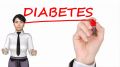
Losing weight and being healthier are at the top of everyone’s New Year’s resolutions. But, despite the best intentions, work, kids, and social events often push lifestyle changes to the bottom of the list. While many are familiar with type 2 diabetes, fewer are aware of prediabetes, a serious health condition that affects 86 million Americans (more than 1 in 3) and often leads to type 2 diabetes. People with prediabetes have higher than normal blood glucose (sugar) levels, but not high enough yet to be diagnosed with type 2 diabetes.
To raise awareness and help people with prediabetes know where they stand and how to prevent type 2 diabetes, the American Diabetes Association (ADA), the American Medical Association (AMA), and the Centers for Disease Control and Prevention (CDC) have partnered with the Ad Council to launch the first national public service advertising (PSA) campaign about prediabetes. The PSA campaign, featuring first-of-its-kind communications techniques, was developed pro bono by Ogilvy & Mather New York for the Ad Council.
Nearly 90 percent of people with prediabetes don’t know they have it and aren’t aware of the long-term risks to their health, including type 2 diabetes, heart attack, and stroke. Current trends suggest that, if not treated, 15 to 30 percent of people with prediabetes will develop type 2 diabetes within five years. The good news is that prediabetes often can be reversed through weight loss, diet changes and increased physical activity. Diagnosis is key: research shows that once people are aware of their condition, they are much more likely to make the necessary lifestyle changes.
To view the multimedia release go to:
http://www.multivu.com/players/English/7731551-ad-council-prediabetes-psa/
This February, the American Academy of Pediatric Dentistry (AAPD) is celebrating National Children’s Dental Health Month by hosting the Tournament of Tooth Care, showcasing how parents and caregivers can help their kids fend off the Mouth Monsters –a.k.a. tooth decay. Parents and caregivers can tune in to the Mouth Madness to learn how to help little teeth take on the Mouth Monsters one big game at a time.
“Tooth decay in children is a major health epidemic for adolescents across the country,” said Dr. Robert Delarosa, AAPD President. “National Children’s Dental Health Month is a great time for parents to keep their children’s dental health top of mind. Make it a priority this month to find a Dental Home – or home base – for your child’s oral health needs and be sure your next check-up is on the calendar.”
Tooth decay is one of the top chronic infectious diseases among children in the U.S. About 60 percent of children will have had tooth decay at some point by age five. More than 50 million school hours are missed every year by school-aged children in the U.S. due to dental visits or problems. And tooth decay isn’t just bad for oral health; children who develop tooth decay at a young age are at a greater risk for developing problems with oral and general health, as well as with educational and social development.
To view the multimedia release go to:
http://www.multivu.com/players/English/7750251-aapd-mouth-madness-dental-health/
Launching today, the Safe Firearms Storage campaign encourages firearms owners to make safe firearms storage a priority. According to a study by the RAND Corporation using statistics from the United States Centers for Disease Control and Prevention, approximately 1.4 million homes have firearms stored in a way that makes them accessible to the wrong hands – children, at–risk youth, potential thieves, and those who intend to harm themselves or others.
To view the Multimedia News Release, go to http://www.multivu.com/mnr/7111651-national-crime-prevention-council-family-firearms-safety-campaign
University of St. Augustine for Health Sciences (USAHS), a leading graduate institution that emphasizes health and rehabilitative sciences education through innovative classroom education, is pleased to announce the installation of SafeGait 360° Balance and Mobility Trainer® on its Austin, Texas campus. The device, which was designed in collaboration with experts in physical therapy (PT) and occupational therapy (OT), works to mitigate the risk of injury from falls, protecting both the patient and therapist. In addition, SafeGait 360°’s dynamic fall protection (DFP) distinguishes between a patient’s intentional downward movement and when a patient is actually falling, which allows therapists to easily modify fall protection sensitivity to accommodate and challenge patients at varying stages of independence.
USAHS is one of the first higher education institutions in the nation to install this innovative body-weight support and fall protection system. In addition to conducting ground breaking research with patients and students, faculty members with extensive experience in body-weight treatments aim to open a clinic which will provide new treatment options to patients in the Austin community, and will begin seeing patients in October of this year.
To view the multimedia release go to:
http://www.multivu.com/players/English/7743851-usahs-safegait-360-physical-therapy/
People who don’t have diabetes think that they are ok. But the way so many people eat, they put themselves at risk for this disease. Eating a diet high in processed foods, high sugar, and simple carbohydrates increase your chances of Type II Diabetes and especially if you are overweight. Other risk factors for Type II Diabetes are elevated triglyceride, low HDL, and high blood pressure.
Union Pacific Railroad this week launched a new campaign exclusively on social media, urging drivers and pedestrians to think about their personal safety first and wait at grade crossings. New videos depict different scenarios in which a jogger, young couple and father and son are stopped, waiting for a train to pass. When the arms lift, each proceeds safely toward a spectacular future.
“Our message is straightforward – Your Life is Worth the Wait,” said Scott Moore, Union Pacific senior vice president – Corporate Relations. “Union Pacific trains operate in more than 7,300 communities; too often our employees see drivers or pedestrians sneak around the gates. Even after applying the emergency brakes, it can take a mile for a train to stop; the risk is never worth it.”
To view the multimedia release go to:
http://www.multivu.com/players/English/7508251-union-pacific-your-life-is-worth-the-wait/
Boston Scientific (NYSE: BSX) has received U.S. Food and Drug Administration (FDA) approval for the SYNERGY™ Bioabsorbable Polymer Drug-Eluting Stent System (BP-DES) for the treatment of coronary artery disease.
With this FDA approval, Boston Scientific will commence commercialization of the first and only BP-DES in the U.S. Notably, both the drug coating and the polymer – which modulates drug release – are fully absorbed shortly after drug elution is complete at three months.
The SYNERGY Stent provides synchronized drug and polymer absorption. It is designed to enable more rapid and complete arterial healing, and to thereby reduce the risk of complications associated with long-term polymer exposure compared to currently-used drug-eluting stents (DES) with permanent polymers.
To view the multimedia release go to:
http://www.multivu.com/players/English/7223456-boston-scientific-fda-approval-synergy/
Soy consumption is up 14 percent since 2011,26 yet confusion lingers over soy’s role in everything from human health to food production. To clear up misperceptions, the United Soybean Board (USB) busts five common soy myths with science-backed facts on SoyConnection.com/soy-wisdom.
1) Eating soy does not increase breast cancer risk.
Clinical studies show soy isoflavone exposure does not adversely affect breast tissue as assessed by markers of breast cancer risk, such as breast cell proliferation.1–7 The American Institute for Cancer Research and the American Cancer Society say that women who have been diagnosed with breast cancer can safely consume soyfoods. In fact, the World Cancer Research Fund International has identified a link between soy consumption and an improved survival of breast cancer patients.8-9
“Not only does evidence indicate soyfoods may benefit women with breast cancer, but consuming soy when young helps prevent the onset of this disease later in life27-30,” stated Mark Messina, Ph.D., who has dedicated the past 30 years to understanding the health effects of soyfoods.
To view the multimedia release go to:
http://www.multivu.com/players/English/7877951-united-soybean-board-top-soy-myths/
https://youtu.be/CsF6J4JwuX4 It’s common knowledge that your computer can be hacked, but are you aware of the bevy of devices, items and industries that are also at risk of attack? In this new world of the Internet of Things, everyday life is made easier, but also more vulnerable. Here are 14 things you probably didn’t know could be hacked.
Palo Alto Networks® (NYSE: PANW), the next-generation security company, today announced the latest edition of its Application Usage and Threat Report (AUTR) completed by the Palo Alto Networks Unit 42 Threat Intelligence team.
The report, based on data from more than 7,000 enterprises worldwide, showcases real-world trends in enterprise application usage and critical developments in how attackers are attempting to infect organizations. It also offers practical recommendations for preventing cyberattacks.
Findings highlight the explosion in adoption of software as a service (SaaS) based applications, with the potential to introduce new security risks, or allow unauthorized access to sensitive data. Through the report, security organizations also gain insight into how long-standing and common attack vectors, such as email and executable files, continue to present challenges, as well as global application usage trends for high-risk categories, such as remote access applications.
To view the multimedia release go to:
http://www.multivu.com/players/English/7049352-palo-alto-networks-autr/
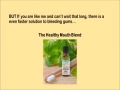
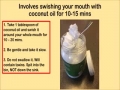
Treating bleeding gums naturally is much simpler than it looks and It has no side effects on your health. This = Winner :)
Link to The Healthy mouth blend full review:
https://bestoralbelectrictoothbrush.com/natural-remedy-for-gum-disease-all-organic-and-no-side-effects/